
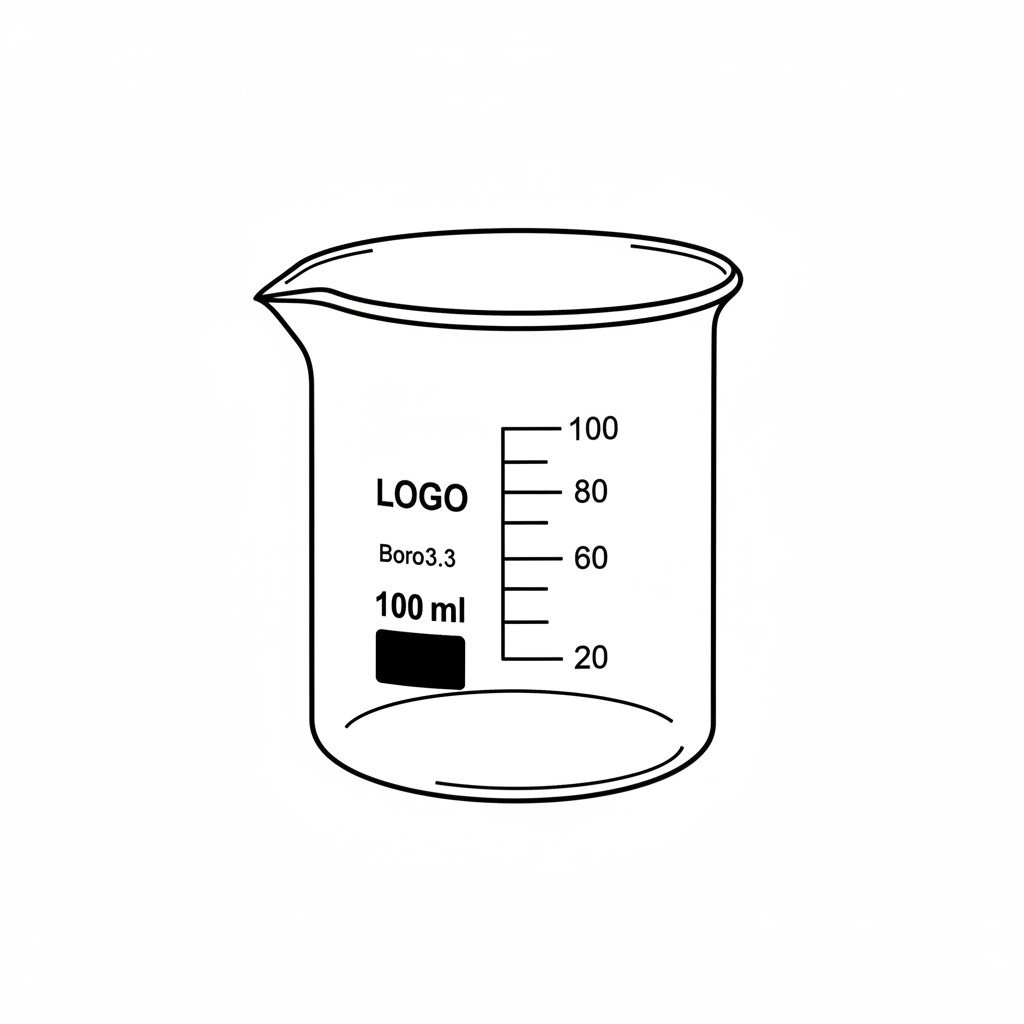
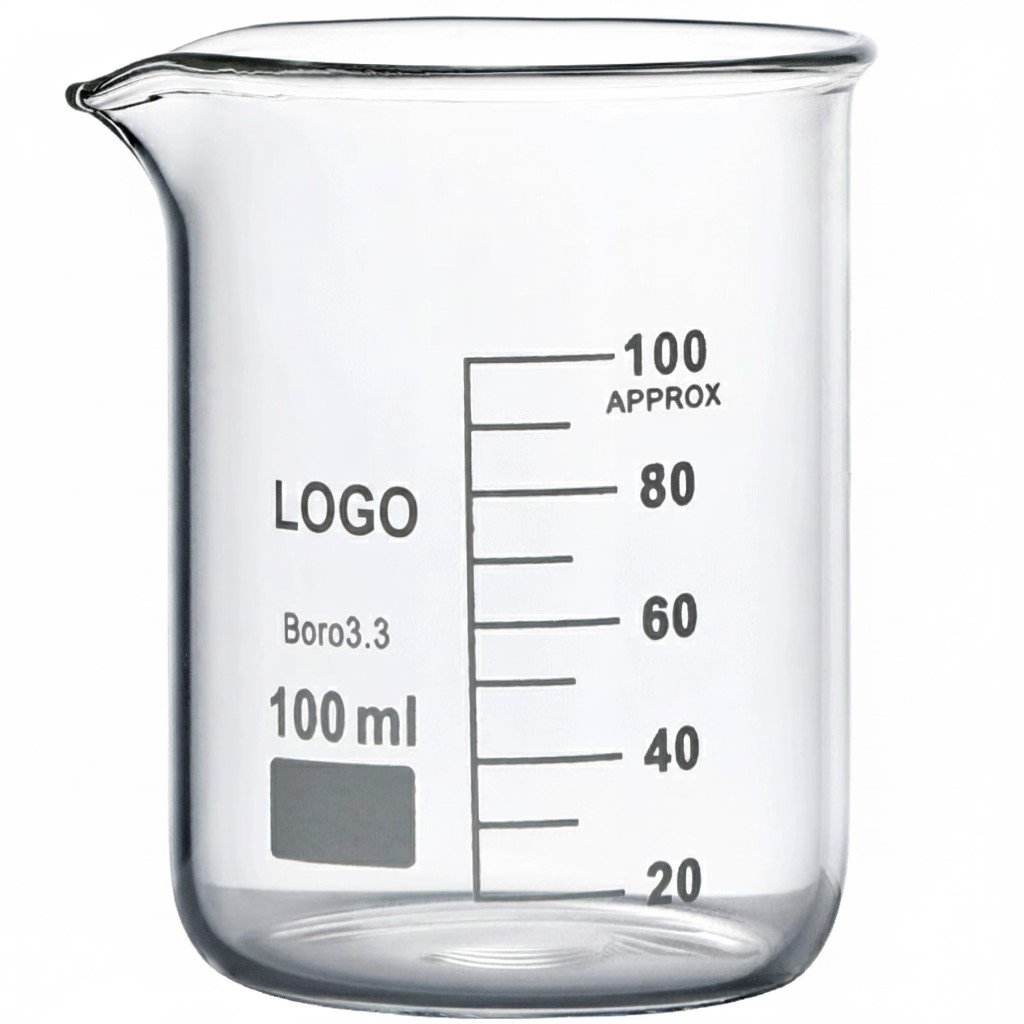
Essential Griffin Low-Form Beaker with Graduation & Spout – Borosilicate Glass – For Laboratory Heating & Boiling
Product Overview
The Griffin low-form beaker—also known internationally as the standard beaker or simply low-form beaker—has been a laboratory essential since the 19th century. Originally devised by English chemist John Joseph Griffin, this iconic design remains the most widely used glassware in labs today. EduSupports brings you this reliable workhorse, manufactured from premium borosilicate glass 3.3. Whether you need to heat, boil, mix, or measure liquids (except hydrofluoric acid), this beaker delivers consistent, dependable performance for daily lab work.
Key Features
Low-profile Griffin design – wide opening for easy stirring and probe insertion
Reinforced rolled rim – extra mechanical strength, safer gripping, less chipping
Single pouring spout – drip-free, precise pouring with no messy benches
Flat bottom – stable on hot plates, stirrers, and workbenches
Rounded inner corners (radius) – uniform heat distribution + easy residue scraping
Printed white graduations – quick, at-a-glance volume estimation
Borosilicate glass 3.3 – excellent thermal shock resistance and chemical durability
Wide size range – from micro (5mL) to bulk (5000mL)
Why Choose the Griffin Low-Form Design?
The low-form (Griffin) beaker offers three practical advantages over tall-form designs. First, its low profile and wide opening make stirring, mixing, and inserting thermometers or probes much easier. Second, the flat bottom provides stable placement on hot plates and workbenches—no tipping. Third, the reinforced rolled rim adds mechanical strength and makes gripping safer. The single spout delivers drip-free pouring, while rounded inner corners allow even heat distribution and simple cleaning. Simply put, the Griffin design is the most practical choice for everyday heating, boiling, and mixing tasks.
Specifications – Find Your Perfect Size
| SKU | Capacity (mL) | O.D. (mm) | Height (mm) | Grad. Interval (mL) | Min. Wall Thickness (mm) |
|---|---|---|---|---|---|
| 0503010010-01 | 5 | 22 | 30 | — | 0.7 |
| 0503010010-02 | 10 | 26 | 35 | 4 | 0.7 |
| 0503010010-03 | 25 | 34 | 50 | 5 | 0.7 |
| 0503010010-04 | 50 | 42 | 60 | 5 | 0.8 |
| 0503010010-05 | 100 | 50 | 70 | 10 | 0.9 |
| 0503010010-06 | 150 | 60 | 80 | 10 | 1.0 |
| 0503010010-07 | 250 | 70 | 95 | 25 | 1.1 |
| 0503010010-08 | 400 | 80 | 110 | 25 | 1.2 |
| 0503010010-09 | 500 | 85 | 120 | 25 | 1.2 |
| 0503010010-10 | 600 | 90 | 125 | 50 | 1.3 |
| 0503010010-11 | 800 | 100 | 135 | 50 | 1.3 |
| 0503010010-12 | 1000 | 105 | 145 | 50 | 1.3 |
| 0503010010-13 | 2000 | 130 | 185 | 100 | 1.4 |
| 0503010010-14 | 3000 | 150 | 210 | 100 | 1.7 |
| 0503010010-15 | 5000 | 170 | 270 | 200 | 2.0 |
Note: 5 mL and 10 mL are not graduated. Graduations are approximate—use a graduated cylinder for precise measurement.
Applications – From Micro to Macro
| Capacity Range | Typical Use |
|---|---|
| 5 – 25 mL | Microanalysis, small‑scale reactions. |
| 50 – 2000 mL | Everyday lab work – mixing, heating, boiling, dissolving。 |
| 3000 – 5000 mL | Semi‑production, pilot batches, or as substitute water baths or electrolytic tanks |
How to Use – Best Practices
Cleaning: New beakers rinse with tap water then distilled water. Used beakers with residues should be soaked in cleaning solution, scrubbed with a brush, and rinsed with distilled water. Check cleanliness by looking for water droplets on the inner wall—droplets indicate a grease film that requires re-cleaning.
Heating Guidelines: Fill no more than one-third of the beaker capacity to prevent boiling over. Always dry the outer wall before heating. Avoid direct flame; use an oil bath, water bath, or sand bath. If unavailable, place the beaker on a wire gauze (ceramic center). Never heat or evaporate concentrated acids (HCl, HNO₃, H₂SO₄), concentrated alkalis, or mercury—toxic or corrosive fumes are dangerous. After heating, do not place the hot beaker on a cold surface. Cool on a wooden board or ceramic mat to prevent thermal shock and breakage.
Safe Handling: When moving the beaker, avoid touching the inner rim to prevent contamination. Not suitable for hydrofluoric acid (HF)—HF attacks borosilicate glass.
Alternatives to Consider
While the low-form Griffin beaker is the lab standard, two other types exist. The tall-form (Berzelius) beaker has a taller, narrower profile—approximately 1.4 times the height of a low-form beaker with the same diameter. Plastic Griffin beakers (made of PP or PFA) are unbreakable and chemically resistant but are not suitable for direct heating on hot plates. For most heating, boiling, and mixing applications, the low-form Griffin design remains the most practical choice due to its stability and easy access.
Why EduSupports?
EduSupports delivers quality labware designed for education and research budgets. Our beakers use borosilicate glass 3.3 (Type I Class A) and comply with ISO 3819 and DIN 12331 international standards. We offer a complete size range from 5mL to 5000mL from a single source. Controlled wall thickness ensures consistent thermal performance, and our lab-friendly pricing makes professional glassware accessible to schools and laboratories worldwide.
Quick Summary – At a Glance
Borosilicate glass 3.3 – thermal shock & chemical resistant
Griffin low-form design – stable, easy to stir, easy to pour
Printed graduations – quick volume estimates
Single spout – dripless, controlled pouring
ISO 3819 compliant – globally recognized dimensions
5mL to 5000mL – one beaker for every job
SKU sequence: 0503010010-01 to -15
EduSupports – quality labware for education and research
 English