
The Ultimate Guide to Laboratory Faucets & Gas Valves: Essential Fixtures for Safe and Efficient Labs
Introduction: Why Specialized Lab Fixtures Matter
In a laboratory setting, ordinary household faucets and gas valves are not acceptable substitutes. Laboratories deal with hazardous chemicals, flammable gases, corrosive substances, and precise experimental conditions that demand specialized fixtures.
The fixtures you choose—water faucets and gas valves—directly impact three critical areas:
Safety — Preventing leaks, backflow, and accidental gas release
Efficiency — Enabling smooth workflow and easy equipment connection
Compliance — Meeting standards like DIN, AGA, CGA, or ASME
Let’s explore the essential fixtures every laboratory needs and understand why they matter.
Part 1: Laboratory Water Faucets
What Are Laboratory Water Faucets Used For?
Laboratory water faucets provide controlled water access for a variety of essential tasks:
| Application | Purpose |
|---|---|
| Handwashing | Personal hygiene and decontamination after handling hazardous materials |
| Equipment Cleaning | Rinsing glassware, beakers, and laboratory apparatus |
| Cooling | Running experiments that require temperature control (condensers, water baths) |
| Emergency Response | Filling eyewash stations or safety showers (indirectly) |
| Dilution | Preparing chemical solutions at specific concentrations |
Types of Laboratory Water Faucets
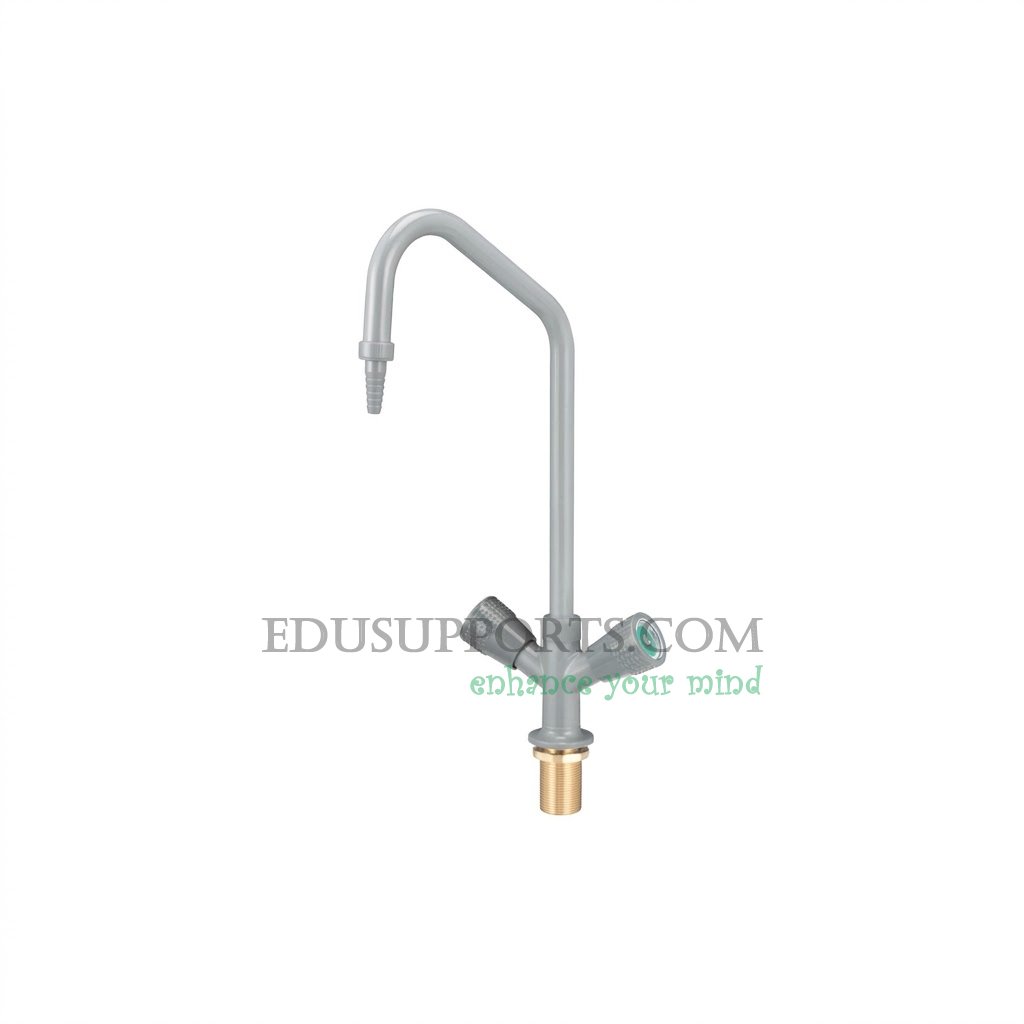
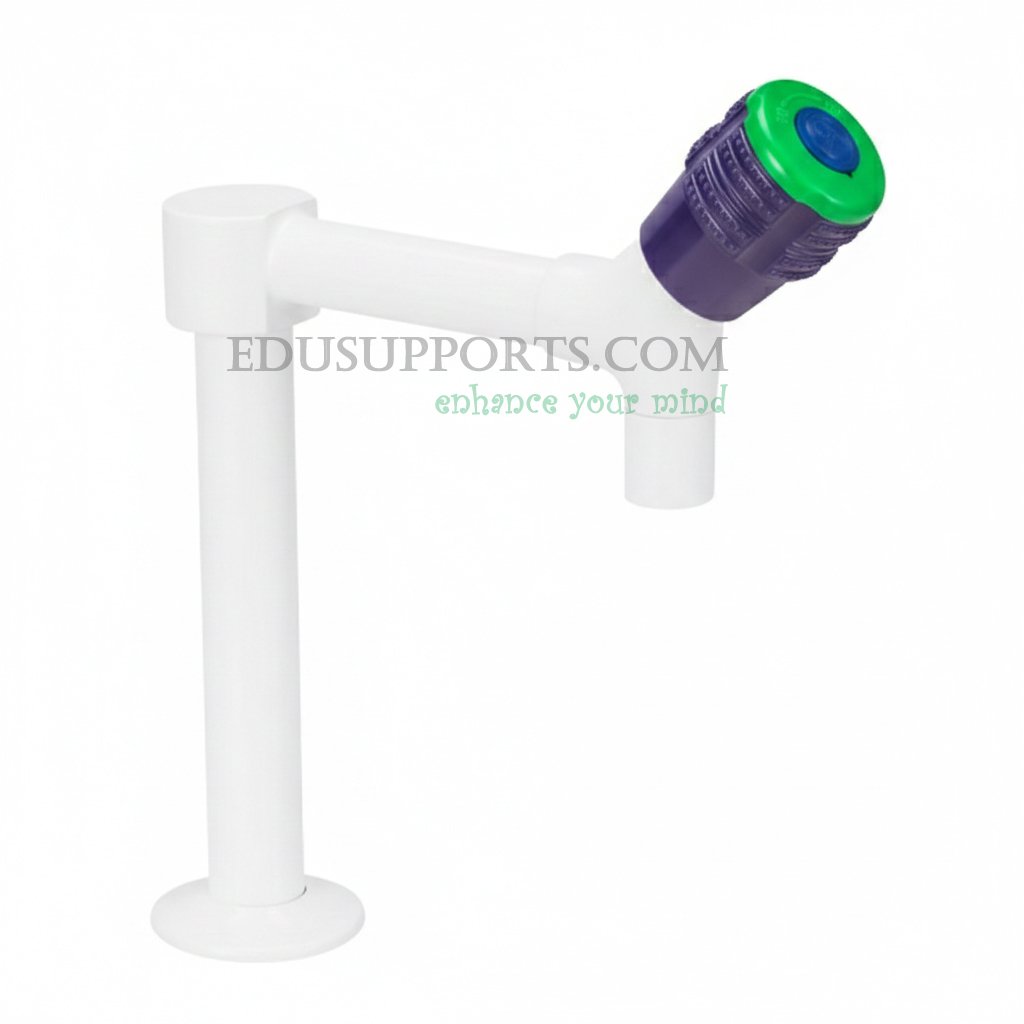
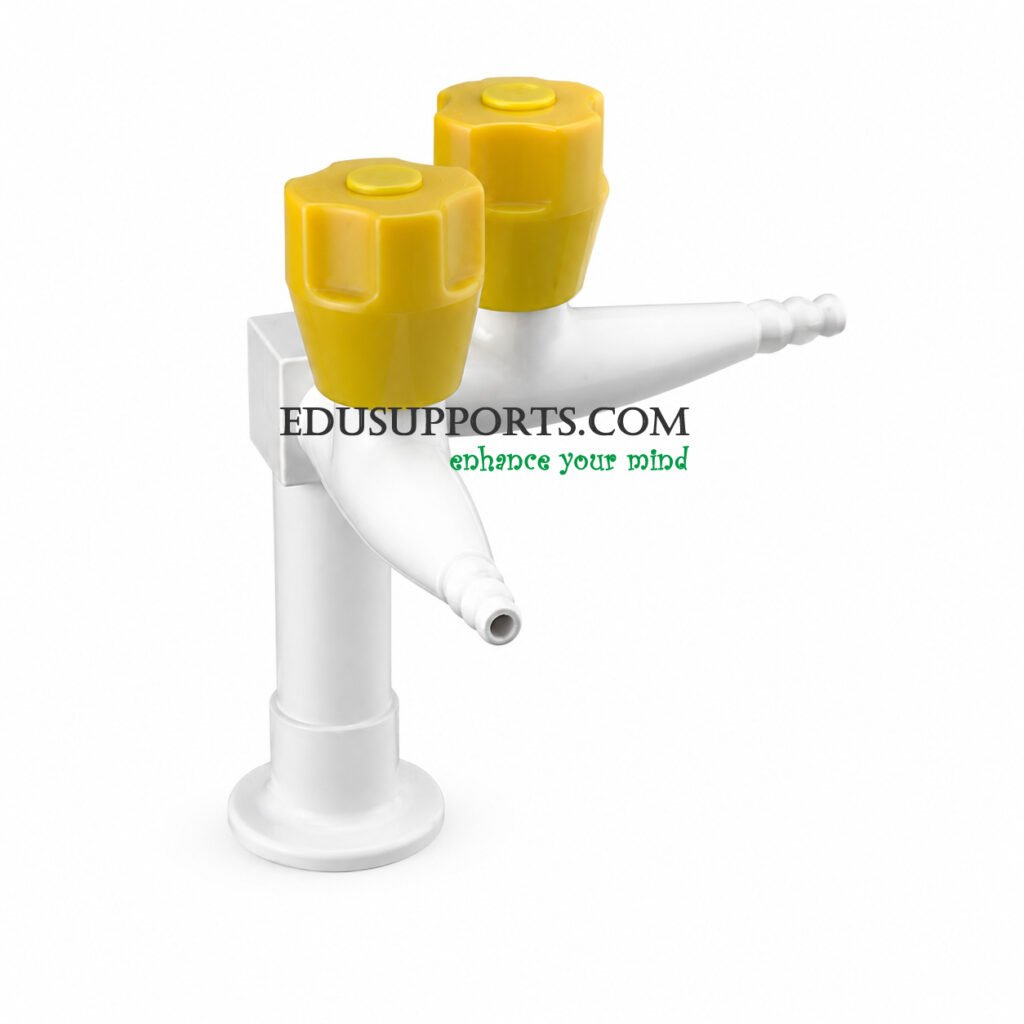
Single-Post Laboratory Faucet
Design: One vertical post with a single water outlet, typically operated by one or two handles (cold water only or cold with optional hot).
Best For:
Student teaching laboratories
Individual workstations where space is limited
Cold-water-only applications
Why Labs Need It:
Single-post faucets are the workhorse of educational and research labs. Their compact design saves valuable bench space, and the gooseneck spout with a removable hose nozzle (per DIN 12898) allows flexible connection to tubing for various experiments.
Dual-Post Laboratory Faucet
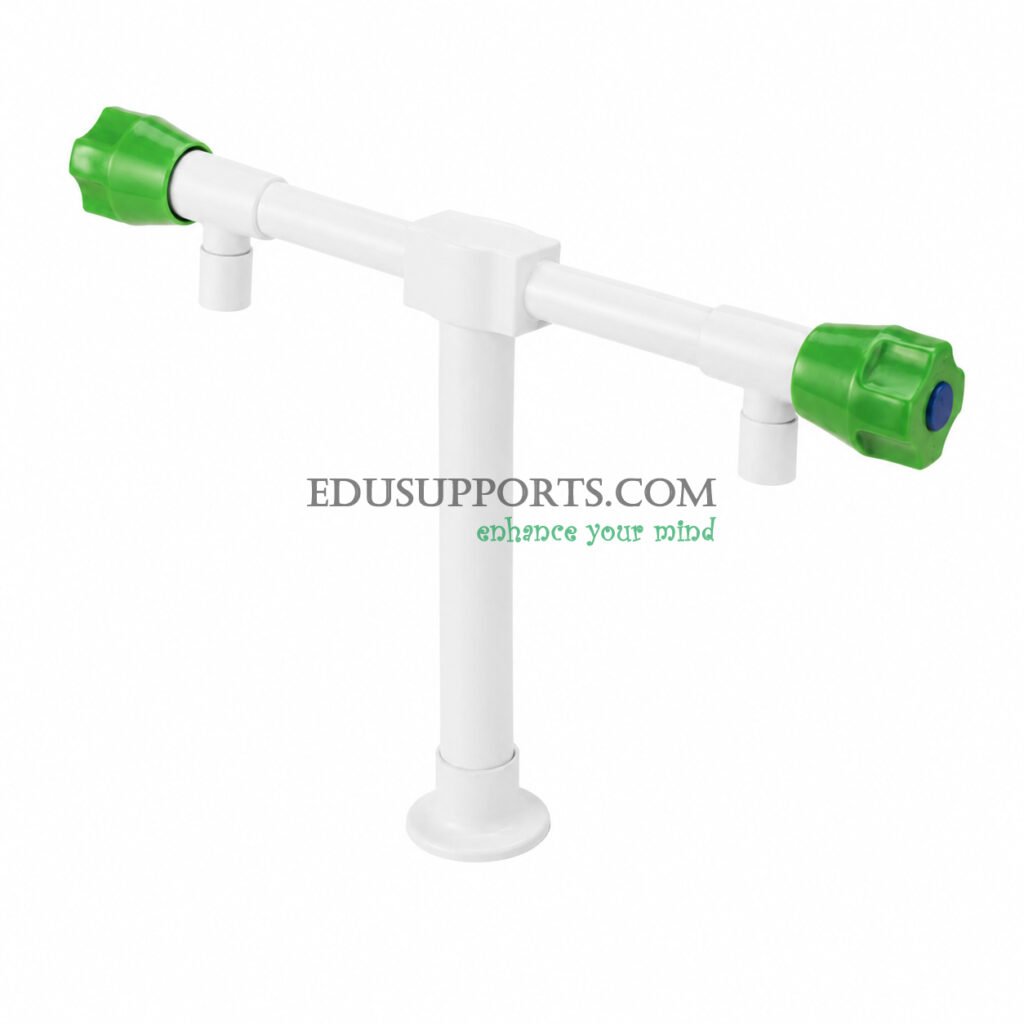
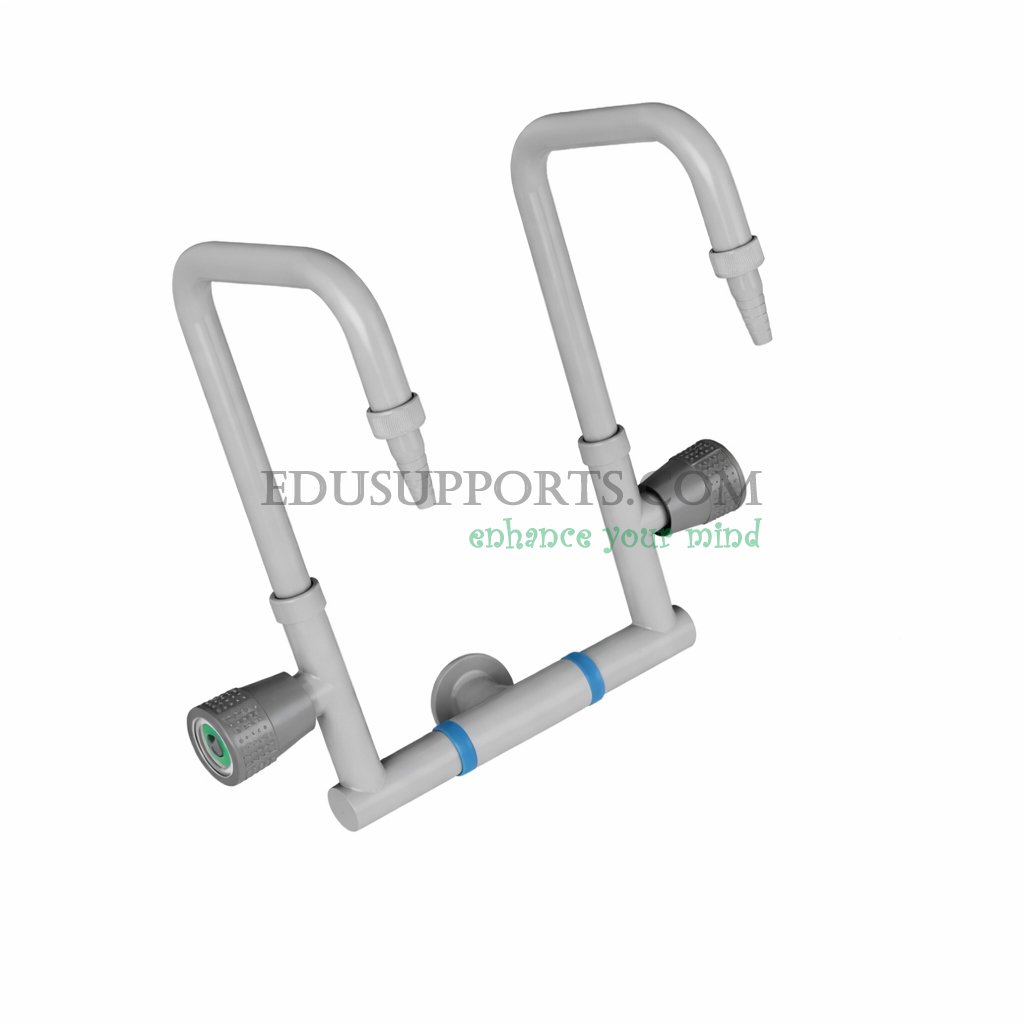
Design: Two separate posts or a single base with two handles controlling hot and cold water independently, mixing at the spout.
Best For:
Preparation rooms and glassware washing stations
Demonstration benches for teacher demonstrations
Applications requiring precise temperature control
Why Labs Need It:
Dual-post designs allow fine-tuned temperature regulation—essential when washing temperature-sensitive glassware or preparing solutions at specific temperatures. Many models include backflow prevention valves to prevent contaminated water from siphoning back into the main water supply.
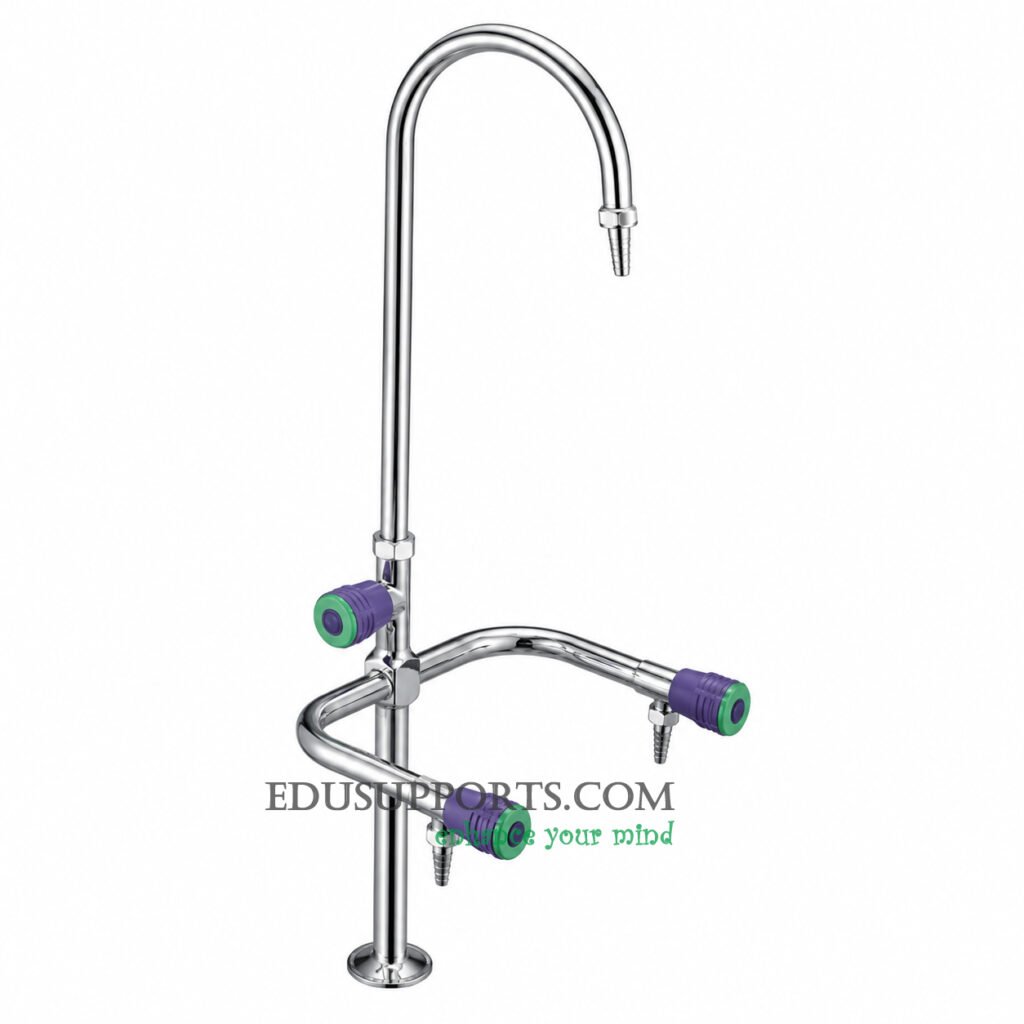
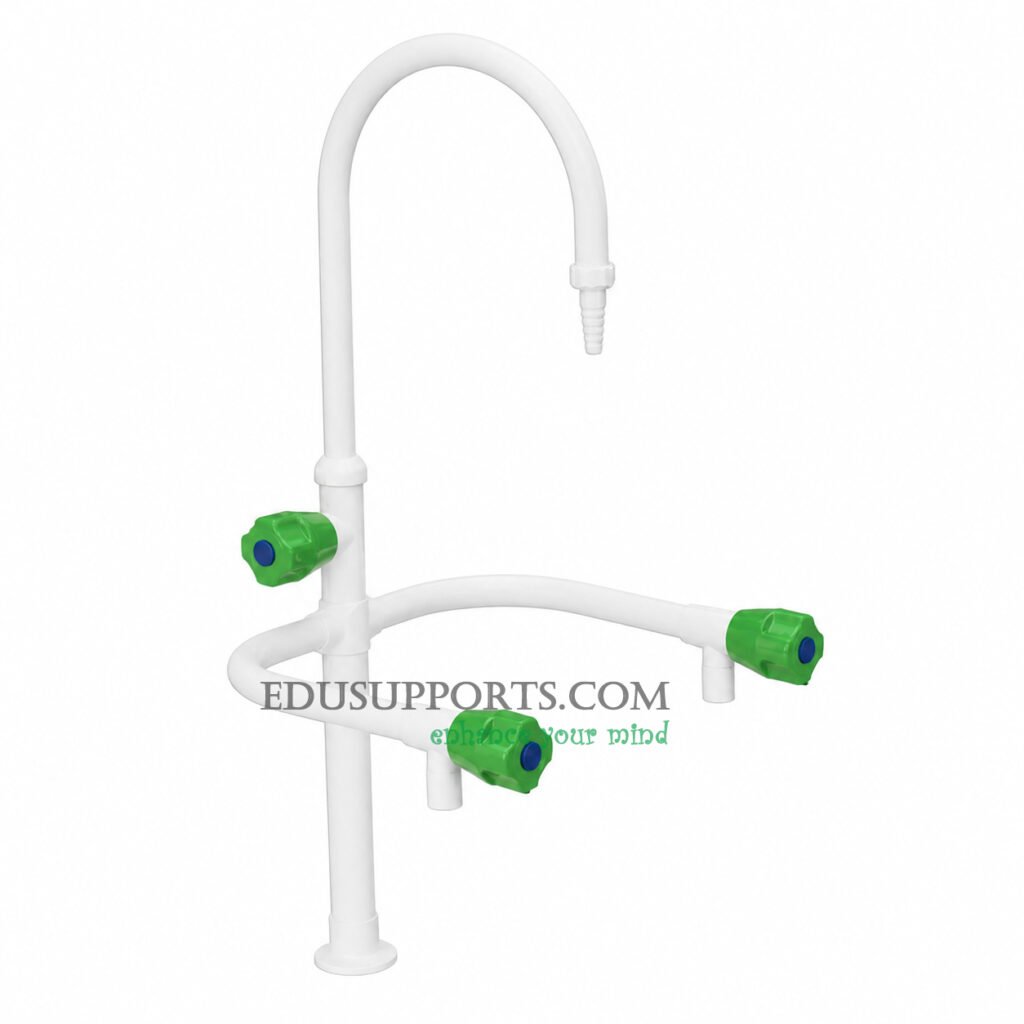
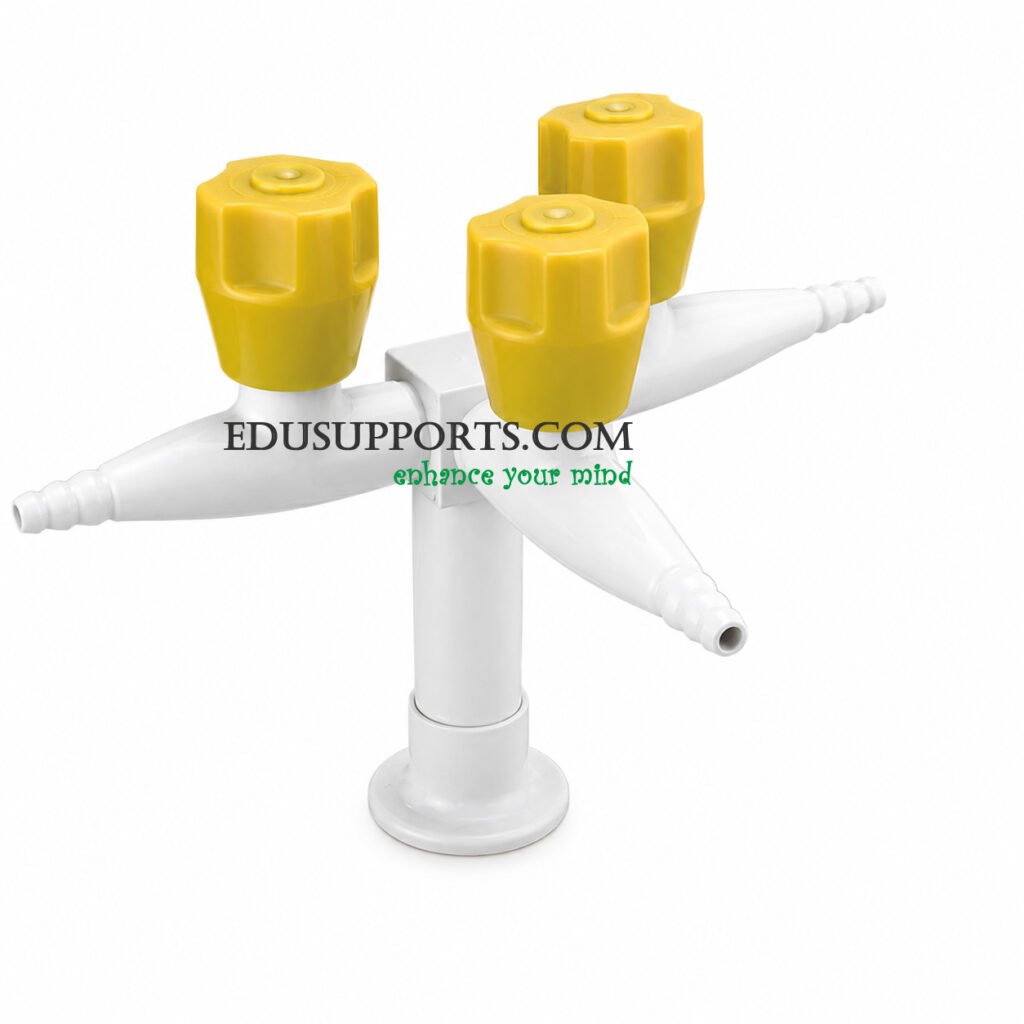
Triple-Post Laboratory Faucet
Design: Three independent valves controlling three different water sources—typically hot, cold, and deionized (DI) or distilled water.
Best For:
Advanced research laboratories
Applications requiring ultrapure water
Multi-user workstations
Why Labs Need It:
Many experiments require deionized or distilled water to prevent contamination from ions or impurities. A triple-post faucet keeps all three water types accessible from a single point, eliminating the need for separate DI water dispensing systems.
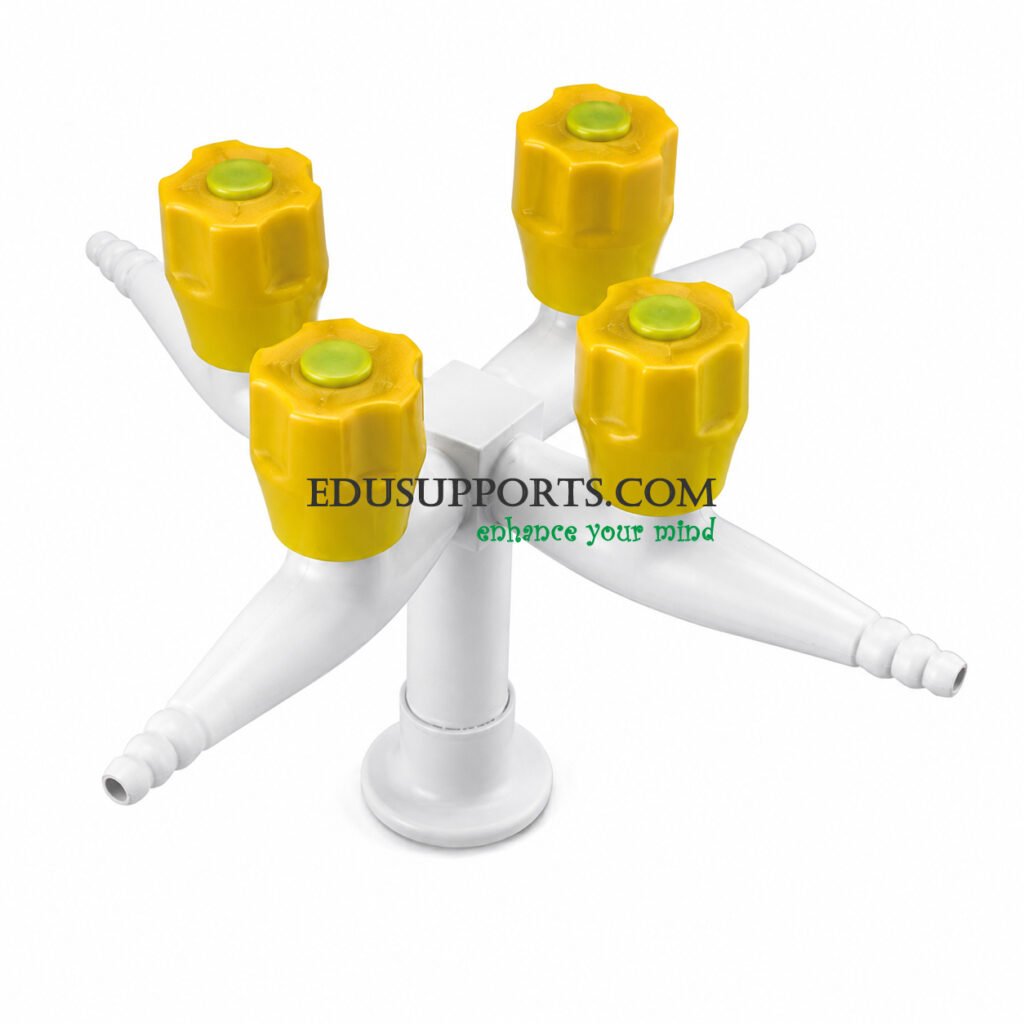
Six-Outlet Laboratory Faucet
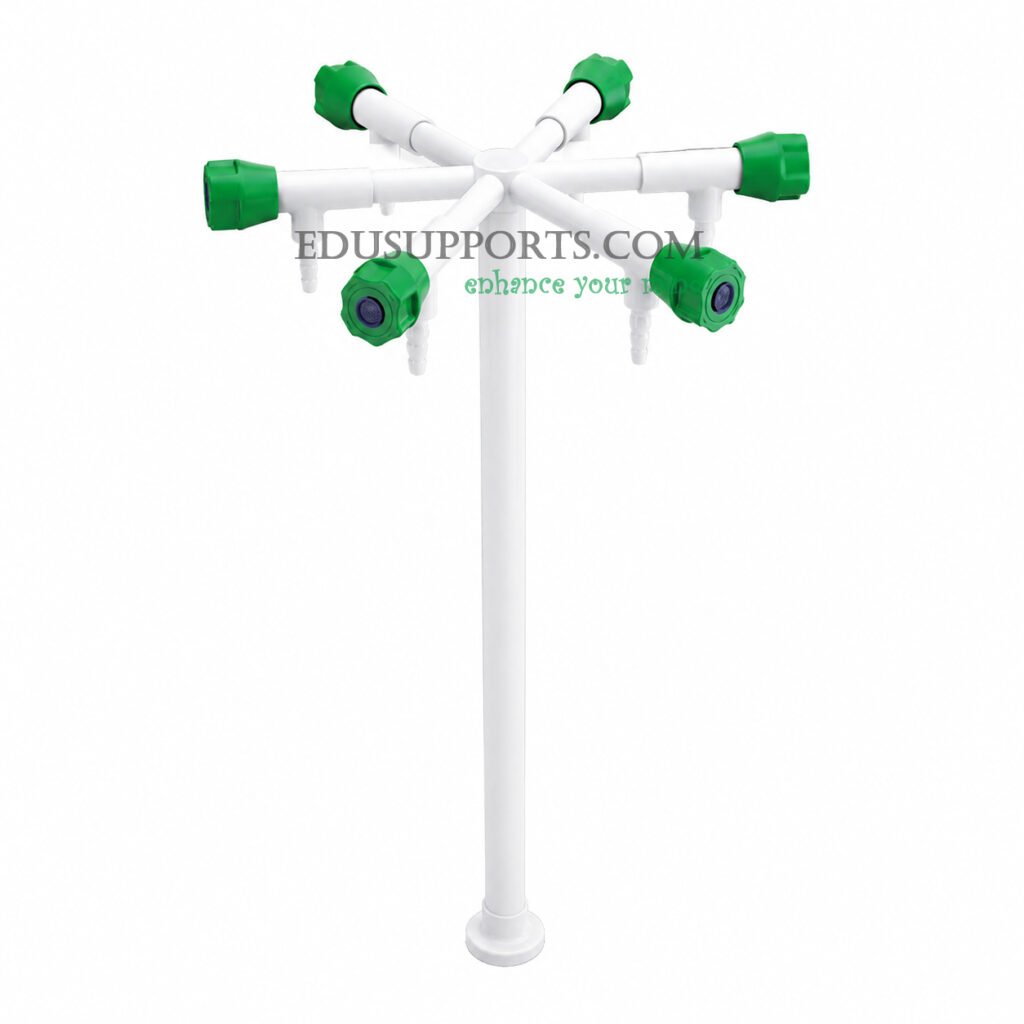
Design: A manifold-style fixture with six independent outlets, each with its own shutoff valve.
Best For:
High-throughput washing stations
Multiple-user benches
Applications where several pieces of equipment need continuous water supply
Why Labs Need It:
In busy preparatory laboratories or quality control settings, multiple technicians often need water simultaneously. A six-outlet faucet allows each user to connect their own tubing without disrupting others—dramatically improving workflow efficiency.
Key Features to Look For in Lab Water Faucets
| Feature | Why It Matters |
|---|---|
| Corrosion-resistant coating | Epoxy powder coating (RAL 7035 light grey is standard) resists acids, alkalis, and solvents |
| Removable hose nozzle | Allows connection of tubing for specific experiments (per DIN 12898) |
| Backflow prevention | Prevents chemical contamination of building water supply |
| Swivel spout (360°) | Enables multi-directional use and easy sink access |
| Ceramic or PTFE seals | Provides leak-free operation through hundreds of thousands of cycles |
Part 2: Laboratory Gas Valves
What Are Laboratory Gas Valves Used For?
Laboratory gas valves control the flow of gases to workstations for experiments and analytical procedures.
Common Gases Supplied Through Lab Gas Valves:
| Gas Type | Typical Application |
|---|---|
| Natural Gas / Methane | Bunsen burners for heating, sterilization, and flame tests |
| LPG (Propane/Butane) | High-temperature heating applications |
| Nitrogen (N₂) | Inert atmosphere for sensitive reactions, purging equipment |
| Compressed Air | Driving pneumatic equipment, drying glassware |
| Hydrogen (H₂) | Flame ionization detectors (GC-FID), reduction reactions |
| Oxygen (O₂) | Combustion analysis, oxidation reactions |
| Carbon Dioxide (CO₂) | Cell culture incubation, pH control |
| Vacuum | Filtration, solvent evaporation, degassing |
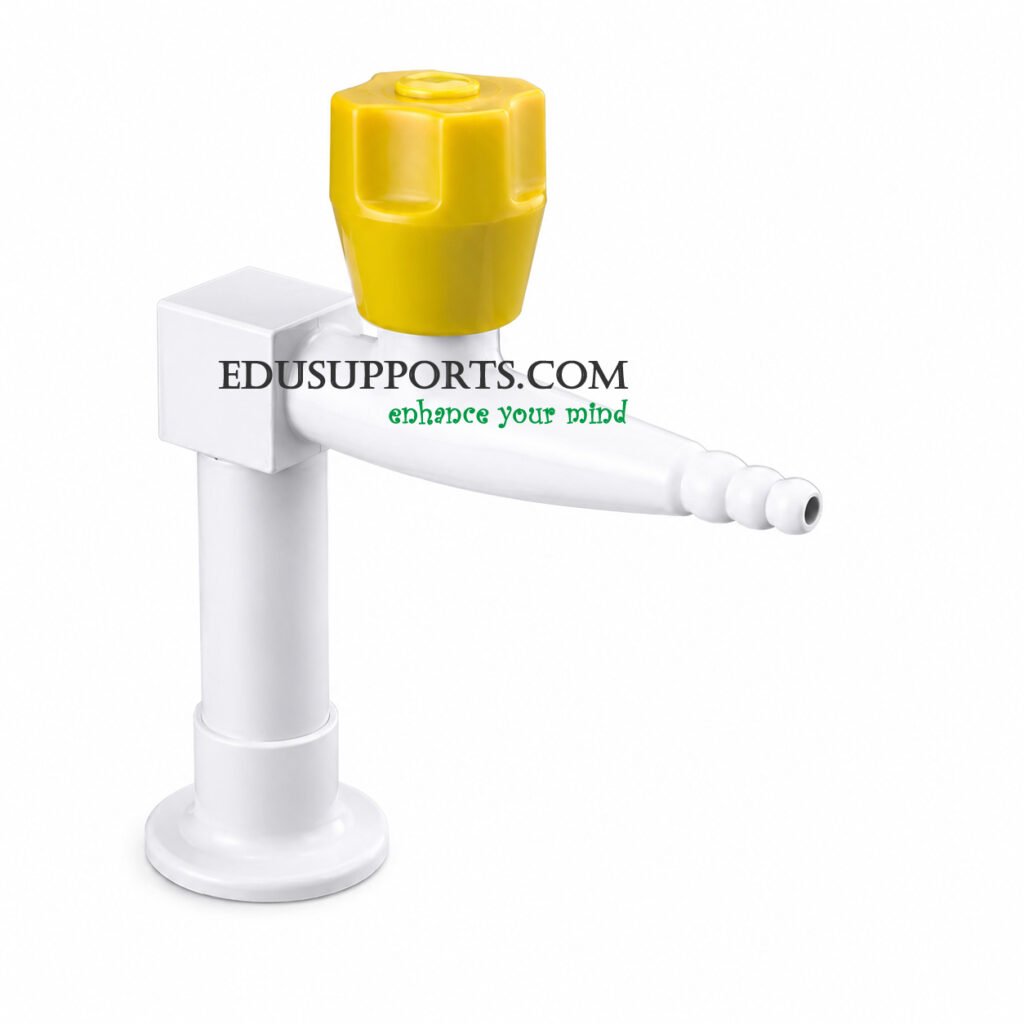
Solid Brass Laboratory Gas Valve
Design: A robust valve with a solid brass body, often featuring:
Quarter-turn operation (90° rotation from fully closed to fully open)
Colored index disc indicating the specific gas service
Removable hose nozzle for tubing connection
Best For:
General gas distribution in teaching and research labs
Bunsen burner connections on student benches
Fume hood gas outlets
Why Labs Need Brass:
Solid brass offers exceptional corrosion resistance and durability in laboratory environments. C26000 brass alloy, for example, provides 40% better corrosion resistance than standard brass, extending service life even when exposed to acidic or alkaline conditions.
Safety features to look for:
AGA/CGA certification — Ensures the valve meets gas safety standards
Quarter-turn operation — Allows rapid shutoff in emergencies
Index disc labeling — Prevents dangerous cross-connection of incorrect gases (e.g., attaching a nitrogen hose to an oxygen valve)
Key Differences: Water Faucets vs. Gas Valves
| Feature | Water Faucets | Gas Valves |
|---|---|---|
| Handle design | 4-blade handle (DIN EN 13792) | 2-blade (disc) handle for flammable gases |
| Operation | Multiple turns for fine flow control | Often quarter-turn for rapid shutoff |
| Sealing mechanism | Ceramic disc or elastic cone | PTFE ball seals or ceramic discs |
| Hose nozzle | Removable (per DIN 12898) | Often fixed for gas-tight connection |
| Maximum pressure | Up to 10 bar (water) | 0.2 bar (natural gas) to 6 bar (technical gases) |
Part 3: Educational & Knowledge-Based Context
Part 3: Educational & Knowledge-Based Context
1. Contamination Prevention
In research laboratories, cross-contamination can ruin experiments and lead to false conclusions. Dedicated fixtures prevent this through:
Backflow preventers — Stop contaminated water from flowing back into the supply line
One-way gas valves — Eliminate backflow of hazardous gases into distribution systems
Dedicated outlets — Prevent mixing of different water types (tap vs. DI water)
2. Chemical Resistance
Laboratory fixtures face daily exposure to:
Strong acids (HCl, H₂SO₄, HNO₃)
Caustic alkalis (NaOH, KOH)
Organic solvents (acetone, ethanol, dichloromethane)
Standard chrome-plated brass or epoxy-coated fixtures resist these chemicals far better than residential-grade faucets.
3. Emergency Response
When a chemical spill occurs or a fire breaks out, every second counts. Laboratory gas valves with quarter-turn operation allow technicians to shut off gas supplies instantly. Similarly, dedicated water fixtures ensure eyewash stations and safety showers receive adequate flow.
4. Ergonomic Design for Gloved Hands
Laboratory personnel wear protective gloves that make operating standard small handles difficult. Laboratory fixtures feature:
Large, ergonomic handles — Easy to grip with gloved hands
Lever operation — Can be operated with an elbow or wrist to maintain sterility
Push-turn mechanisms — Prevent accidental opening
5. Regulatory Compliance
Laboratory fixtures must meet specific standards depending on the region and application:
| Standard | Scope | Region |
|---|---|---|
| DIN 12918-1 / -2 | Laboratory taps and gas valves | Germany / Europe |
| DIN EN 13792 | Color coding for laboratory valves | Europe |
| AGA / CGA | Gas appliance certification | North America |
| ASME / ANSI | Pressure and plumbing standards | North America |
| EN 14056-1:2025 | Laboratory bench services installation | Europe |
Color Coding: A Universal Safety Language
Per DIN EN 13792, laboratory valve handles are color-coded by the media they control:
| Color | Media |
|---|---|
| Blue | Cold water |
| Red | Hot water |
| Green | Deionized / distilled water |
| Yellow | Natural gas / methane |
| Brown | LPG / propane |
| Gray | Compressed air |
| White | Vacuum |
| Black | Nitrogen |
| Blue (light) | Oxygen |
This universal system allows any trained laboratory worker to identify the correct valve instantly—even in an emergency or when working in an unfamiliar lab.
Part 4: Product Overview — Edusupports Laboratory Fixtures
Based on the product URLs provided, Edusupports offers a comprehensive range of laboratory fixtures suitable for educational institutions, research facilities, and industrial laboratories.
Product Line Summary
| Product | Primary Application | Key Advantage |
|---|---|---|
| Single-Post Laboratory Faucet | Individual student workstations, cold water only | Space-saving, economical |
| Dual-Post Laboratory Faucet | Hot & cold water mixing, preparation areas | Temperature control, backflow prevention |
| Triple-Post Laboratory Faucet | Hot, cold & DI water access | Multi-water-type convenience |
| Six-Outlet Laboratory Faucet | High-traffic washing stations | Multiple simultaneous users |
| Laboratory Gas Valve (Solid Brass) | Bunsen burner & gas equipment connection | Durable, corrosion-resistant, safe |
Selection Guide: Which Fixtures Does Your Lab Need?
For a High School Chemistry Laboratory
Water: Single-post faucets at each student station (cold water only)
Gas: Solid brass gas valves with quarter-turn operation at each student station
Sink: Single bowl, stainless steel 316 grade with acid-resistant grate
For a College Teaching Laboratory
Water: Single-post faucets for students; dual-post for the demonstration bench
Gas: Gas valves with push-turn safety mechanisms to prevent accidental opening
Sink: Multiple stations with gooseneck faucets and removable nozzles
For a Research Laboratory
Water: Triple-post faucets (hot/cold/DI) at key stations
Gas: Valves with index discs for multiple gas types (N₂, air, natural gas, vacuum)
Special requirements: Oxygen-compatible valves with special cleaning for pure gas service
For a Preparation / Washing Room
Water: Six-outlet faucet for multiple users; dual-post with swivel spout for glassware washing
Sink: Double-bowl sink unit (one deep bowl, one shallow bowl) with drainers
Part 5: Installation & Safety Best Practices
Water Faucet Installation Tips
Backflow prevention — Always install approved backflow preventers on laboratory water lines
Dedicated traps — Install appropriate traps (e.g., paint/clay traps for art labs) to prevent solids from entering drainage
Accessibility — Mount valves at heights accessible to all users; consider ADA requirements
Clear labeling — Label all water outlets (hot/cold/DI) clearly
Gas Valve Installation & Safety Tips
Certification required — Use only AGA/CGA-certified valves for gas service
Index discs — Install color-coded index discs indicating the specific gas type
Special cleaning for pure gases — Valves for hydrogen or oxygen service require special cleaning to remove hydrocarbon contaminants
Pressure ratings — Match valve pressure rating to application:
Natural gas/LPG: 200 mbar maximum
Technical gases: Up to 6 bar
Compressed air: Up to 10 bar
Mounting options — Choose appropriate mounting:
Wall-mounted for fixed workstations
Overhead (undermount) for fume hoods or flexible setups
Bench-mounted for student laboratories
Regular Maintenance
| Component | Inspection Frequency | Action Required |
|---|---|---|
| Valve seals (PTFE/ceramic) | Annually | Replace if leaking after 500,000+ cycles |
| Hose nozzles | Quarterly | Check for cracks or wear; replace as needed |
| Backflow preventers | Annually | Test according to local plumbing code |
| Gas valve index discs | Visually each use | Ensure correct gas type is indicated |
Conclusion: Invest in Quality Laboratory Fixtures
Laboratory faucets and gas valves are not accessories—they are essential safety equipment. Choosing high-quality fixtures from reputable suppliers like Edusupports ensures:
Safety — Leak-free operation, proper pressure ratings, and emergency shutoff capability
Compliance — Meeting DIN, AGA, CGA, and other relevant standards
Durability — Withstanding corrosive chemicals and daily heavy use
Efficiency — Enabling smooth workflows and easy equipment connection
Whether you need a simple single-post water faucet for a high school chemistry lab or a six-outlet manifold for a busy research facility, Edusupports offers the fixtures you need.
 English