
Laboratory beakers are the workhorses of any scientific environment. From high school chemistry labs to professional geological and textile analysis facilities, the humble beaker is indispensable. But with various shapes, materials, and designs available, selecting the right one for your specific application can be challenging.
At EduSupports, we supply a full range of professional borosilicate glass beakers – from the everyday Griffin (low-form) to the specialized Berzelius (tall-form) and Phillips conical beakers. In this guide, we’ll break down the key differences, applications, and best practices for each type, helping you make an informed decision for your lab.
Why Borosilicate Glass? The Foundation of a Good Beaker
Before diving into shapes, it‘s crucial to understand the material. Nearly all high-quality laboratory beakers, including those from EduSupports, are made from borosilicate glass 3.3. This material offers two critical advantages:
-
Excellent Thermal Shock Resistance – You can heat a borosilicate beaker on a hot plate and place it on a ceramic board without it cracking, provided you avoid extreme, sudden temperature changes.
-
High Chemical Durability – Borosilicate glass resists attack from most acids, alkalis, and organic solvents (with the notable exception of hydrofluoric acid, HF).
All beakers discussed below comply with ISO 3819 and DIN 12331 international standards, ensuring consistent dimensions and quality.
Also known as: Standard beaker, low-form beaker
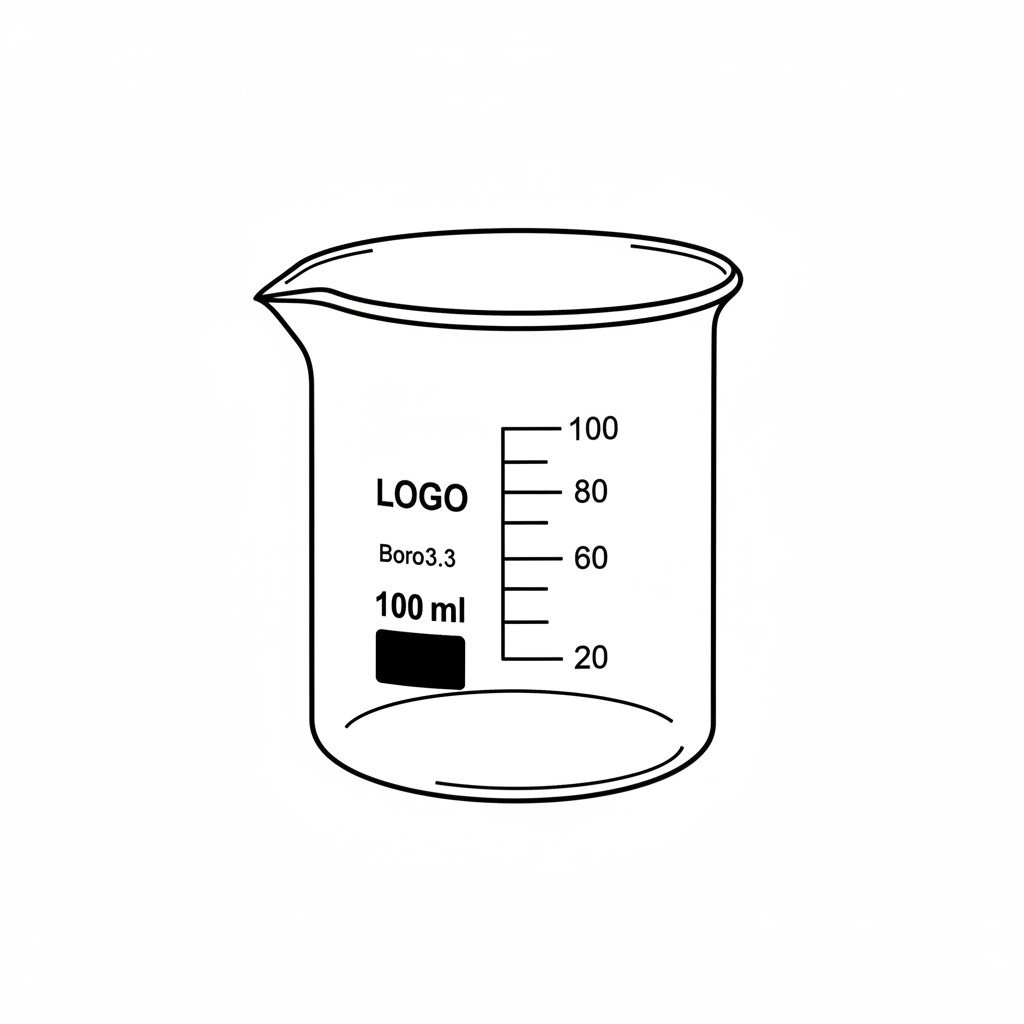
- Best for: General heating, boiling, dissolving, mixing, and stirring.
Key Characteristics:
-
Shape: Low profile, wide opening. Height is approximately 1.2× the diameter.
-
Features: Flat bottom, reinforced rolled rim, single pouring spout, printed white graduation.
The Griffin beaker is the most common type found in any laboratory. Its low, wide design provides excellent stability on hot plates and workbenches. The wide opening makes it easy to insert stir bars, thermometers, or pH probes.
Typical Applications:
-
Daily chemical solution preparation
-
Heating water or aqueous solutions
-
General sample mixing and storage
-
Use as a container for titrations (when a wide opening is preferred)
EduSupports Griffin Low-Form Beaker Series:
-
Capacity range: 5 mL to 5000 mL
-
SKU sequence: 0503010010-01 to -15
-
Best for microanalysis (1–25 mL) and macroanalysis (50–2000 mL) .
Also known as: High-form beaker, tall beaker
Key Characteristics:
-
Shape: Tall and narrow. Height is approximately twice the diameter.
-
Features: Flat bottom, rolled rim, spout, printed graduation.
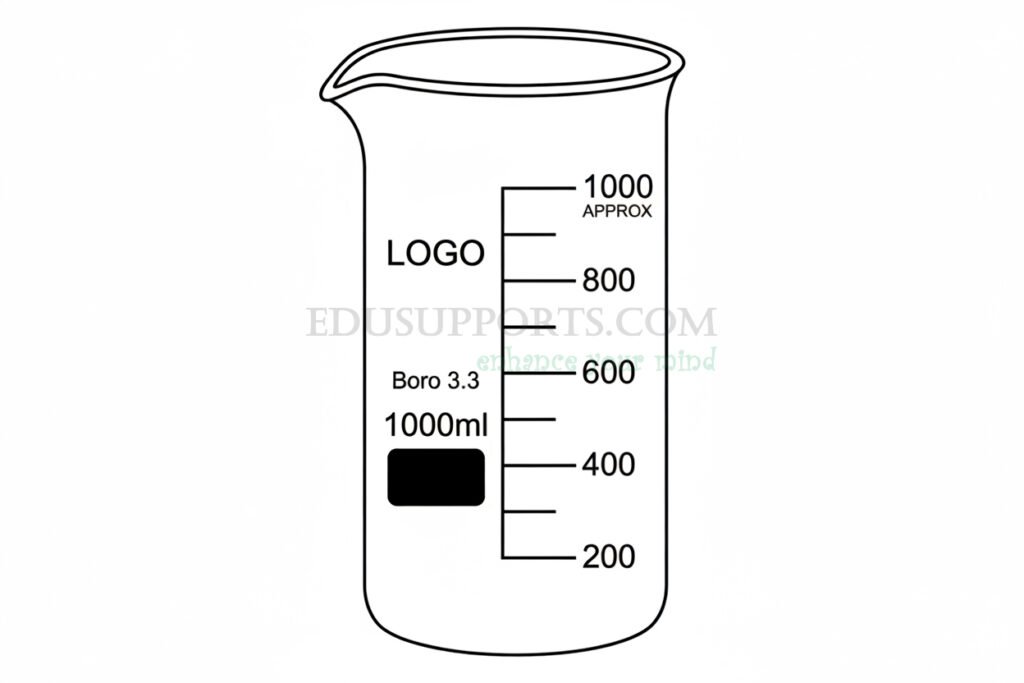
- Best for: Low boiling point substances (petroleum, oils), emulsions, titrations.
The Berzelius tall-form beaker trades a wide footprint for height. This design serves a specific purpose: preventing foaming and boil-over. When heating substances like milk, oil, or petroleum distillates, bubbles rise rapidly. The extra height gives these bubbles space to collapse before reaching the rim.
Typical Applications:
-
Heating low boiling point substances (petroleum ether, benzene, light oils)
-
Titration procedures – the narrow diameter allows easier swirling
-
Steel and geological analysis – often used with sand baths
-
As a substitute for electrolytic or cooling baths (600–1000 mL sizes)
EduSupports Berzelius Tall-Form Beaker Series:
-
Capacity range: 50 mL to 3000 mL (also available in 125 mL)
-
SKU sequence: 0503010020-01 to -12
-
Excellent for applications where reducing volatile losses is important
Also known as: Triangular beaker, conical beaker, Philips beaker
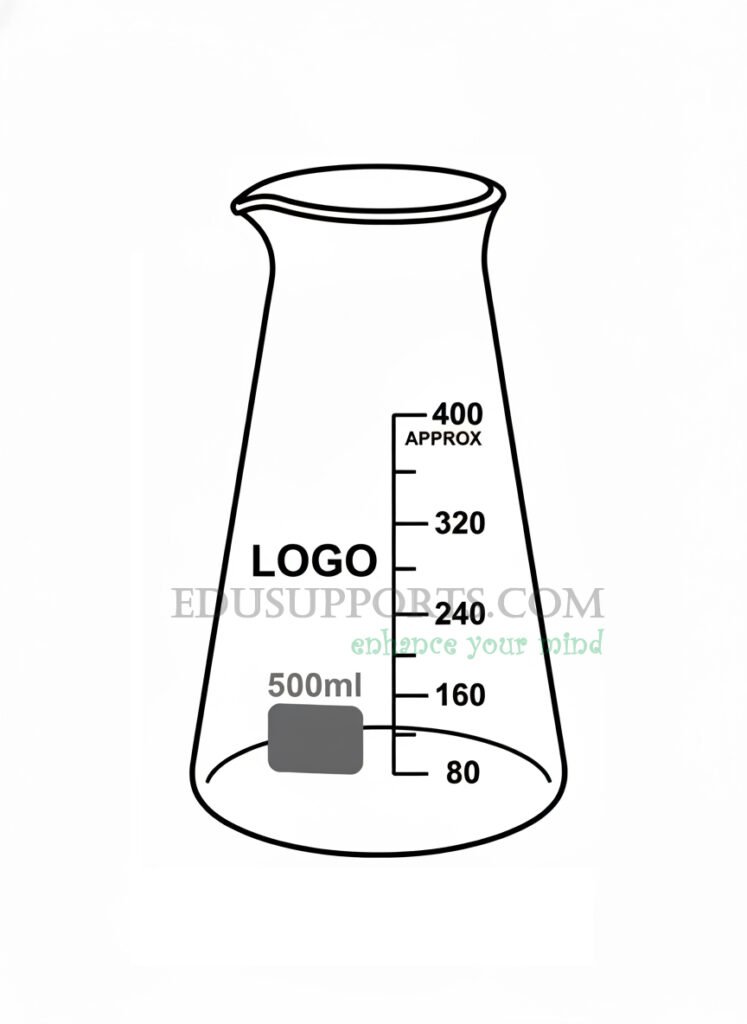
Key Characteristics:
-
Shape: Wide base tapering to a narrow mouth – an inverted cone.
-
Features: Wide stable base, narrow top, spout, printed graduation.
-
Best for: Mineral and alloy analysis, vigorous swirling, atmospheric distillation receivers.
The Phillips conical beaker is a unique hybrid, combining the wide base of a standard beaker with the narrow mouth of an Erlenmeyer flask. This geometry allows for vigorous agitation without splashing – a critical requirement for many analytical procedures.
Typical Applications:
-
Steel and geological departments: Analyzing aluminum alloys, silicon-manganese alloys, and other minerals
-
Swirling operations: The conical shape allows safe, vigorous mixing
-
As a receiving vessel for atmospheric distillation
-
Boron analysis: The narrow mouth reduces volatilization
-
Titration: The narrow top helps observe color changes without losing solution
EduSupports Phillips Conical Beaker Series:
-
Capacity range: 50 mL to 1000 mL (also available in 125 mL)
-
SKU sequence: 0503010030-01 to -08
-
Often referred to in industry as the Fries beaker or milk beaker
Also known as: Dye pot, staining beaker
Key Characteristics:
-
Shape: Inverted cone – wide mouth, narrow base, no spout.
-
Features: Wide opening for fabric access, stepped middle section for water bath support.
-
Best for: Textile dye color quality analysis, small-batch dyeing trials.
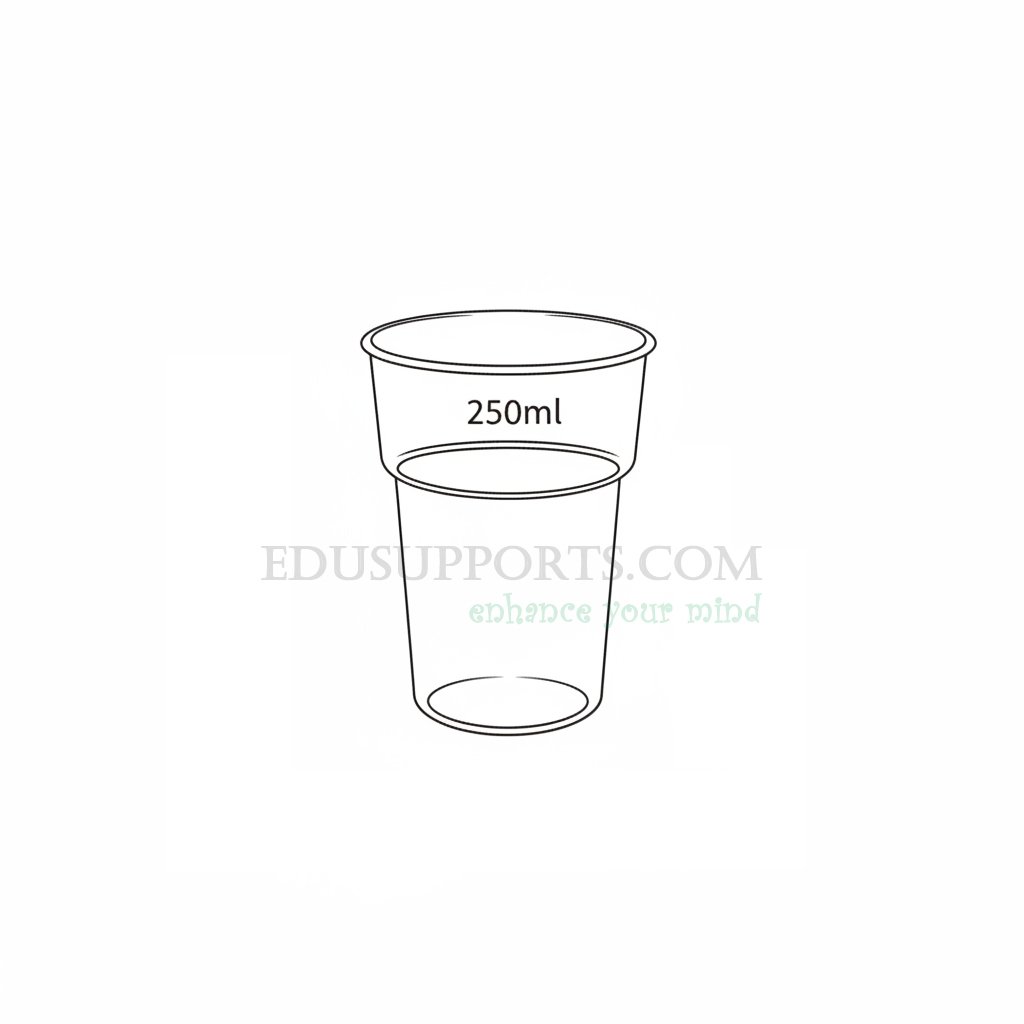
The dyeing beaker is a purpose-built vessel for the textile and printing dyeing industry. Its unique inverted conical design serves three specific functions:
-
Narrow base fits into standard water bath openings for uniform heating.
-
Stepped middle section rests securely on the water bath grid, preventing the bottom from contacting the bath floor.
-
Wide mouth allows easy insertion, stirring, and removal of fabric samples (white cloth, cotton yarn, etc.) without spilling hot dye solution.
Typical Applications:
-
Dye color quality analysis – testing color shade and purity under different times and conditions
-
Small-batch dyeing trials as a “dye pot”
-
Textile industry laboratories and related educational institutions
EduSupports Dyeing Beaker Series:
-
Capacity range: 250 mL, 400 mL, 500 mL
-
SKU sequence: 0503010040-01 to -03
-
Note: No spout – designed to prevent splashing during fabric agitation
Comparison Table: Which Beaker Do You Need?
| Feature / Application | Griffin (Low-Form) | Berzelius (Tall-Form) | Phillips (Conical) | Dyeing Beaker |
|---|---|---|---|---|
| Shape | Low, wide | Tall, narrow | Wide base, narrow top | Inverted cone |
| Best for | General use – heating, mixing | Foaming liquids, oils, petroleum | Mineral analysis, swirling | Textile dyeing trials |
| Spill risk (foaming) | High | Low | Moderate | Very low (no spout) |
| Swirling ability | Fair | Fair | Excellent | Poor |
| Water bath use | Requires adapter | Good | Good | Excellent (narrow base) |
| Fabric sample access | Poor | Poor | Moderate | Excellent (wide mouth) |
| Common industry | All labs | Petrochemical, analytical | Steel, geological | Textile, dyeing |
How to Use Laboratory Beakers – Best Practices
Regardless of the shape, proper use ensures safety and extends the life of your glassware.
Cleaning
-
New beakers: Rinse with tap water, then distilled water.
-
Used beakers: Soak in cleaning solution, scrub with a brush, and rinse with distilled water.
-
Check cleanliness: No water droplets should remain on the inner wall. Droplets indicate a grease film – re-clean.
Heating Guidelines
-
Never fill more than 1/2 to 2/3 full when heating to prevent boil-over.
-
Always dry the outer wall before heating to avoid thermal shock.
-
Avoid direct flame. Use a water bath, oil bath, sand bath, or place on a wire gauze (ceramic center) on a tripod.
-
Never heat or evaporate concentrated acids (HCl, HNO₃, H₂SO₄), concentrated alkalis, or mercury in a beaker – fumes are toxic/corrosive.
-
After heating, cool on a wooden board or ceramic mat. Never place a hot beaker on a cold surface.
Safe Handling
-
Grip the rolled rim, not the inner wall, to prevent contamination.
-
Use a glass rod for stirring – avoid hitting the bottom hard.
-
Do not use for hydrofluoric acid (HF) – HF attacks borosilicate glass.
Why Choose EduSupports for Your Laboratory Beakers?
At EduSupports, we understand that quality labware is an investment in accurate results. Here‘s why laboratories worldwide choose our beakers:
-
Premium Material: All beakers are manufactured from borosilicate glass 3.3 (Type I Class A).
-
Standard Compliance: Fully compliant with ISO 3819 and DIN 12331.
-
Complete Range: From 5 mL to 5000 mL – all common capacities in stock.
-
Multiple Styles: Griffin, Berzelius, Phillips conical, and dyeing beakers – one source for all your needs.
-
Consistent Quality: Controlled wall thickness for reliable thermal performance.
-
Lab-Friendly Pricing: Professional quality at education and research-friendly prices.
 English