What Is a Lab Stand Set? Uses, Components, and How to Choose the Right One
What Is a Lab Stand Set?
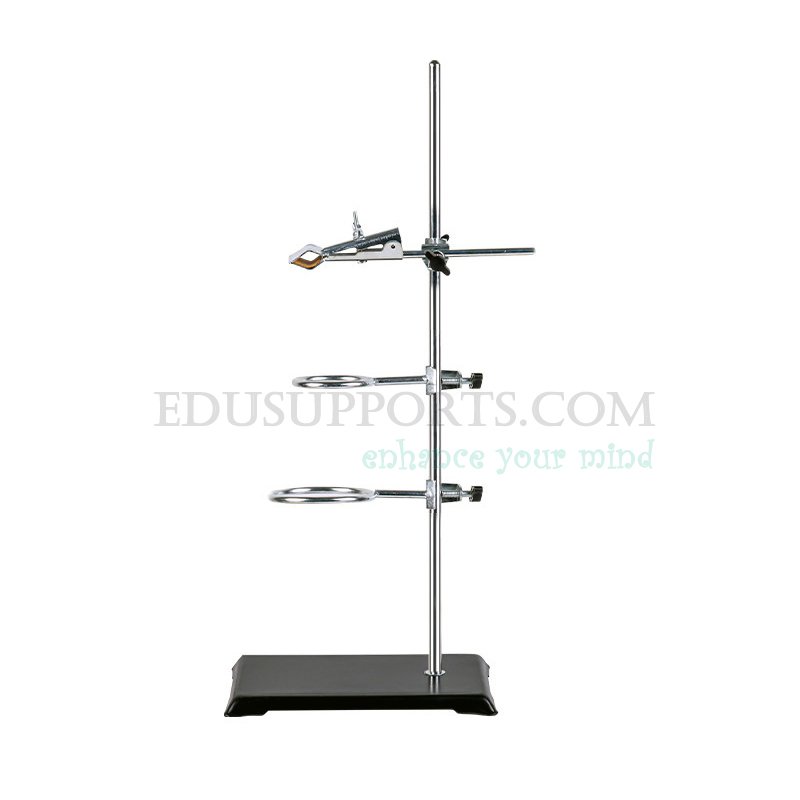
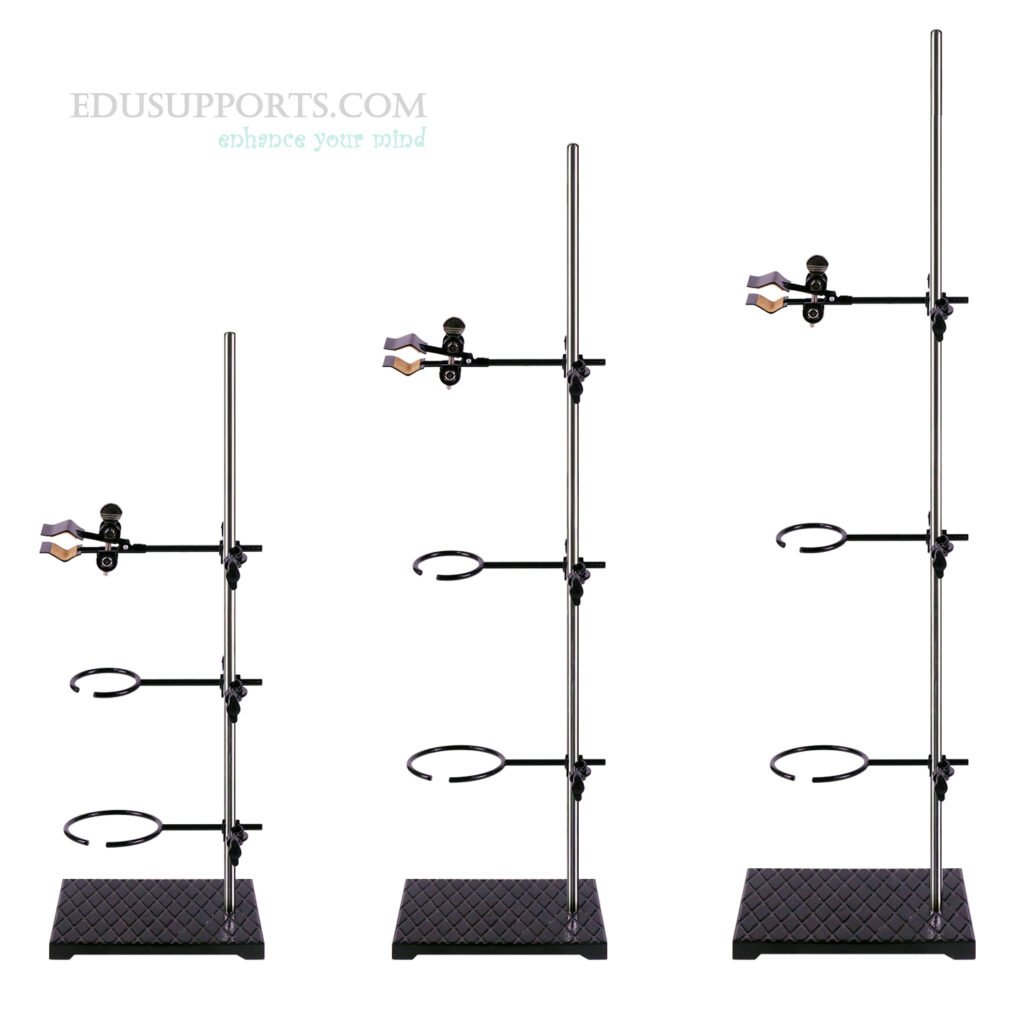
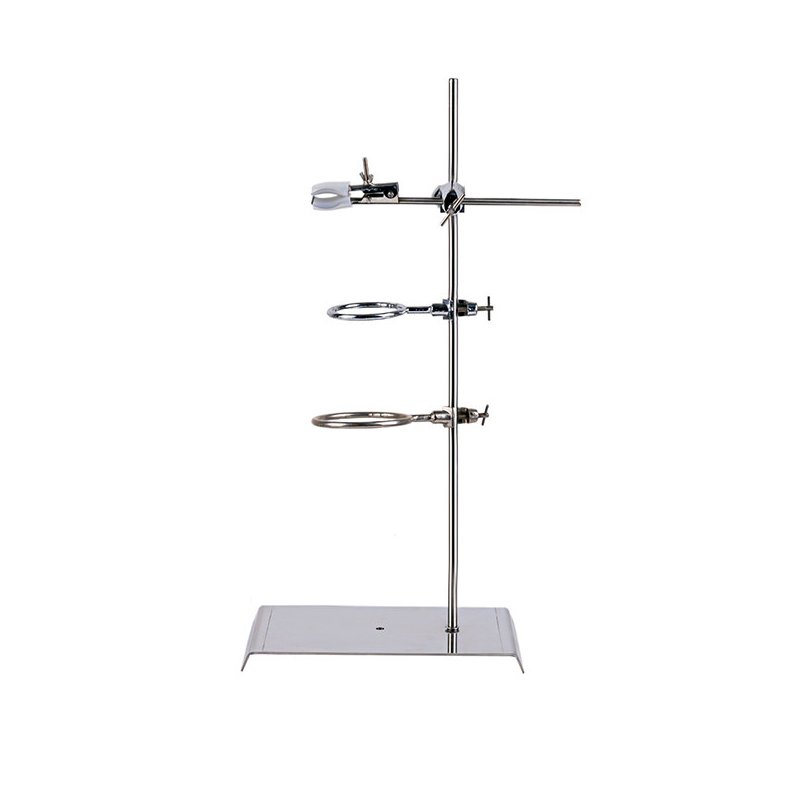
A lab stand set, also known as a retort stand set or ring stand setup, is one of the most essential pieces of laboratory equipment used to hold and support experimental apparatus securely. It typically consists of a heavy base, a vertical rod, and various accessories such as clamps and rings.
In laboratory environments, lab stand sets are widely used to stabilize glassware like burettes, flasks, and test tubes during experiments. retort stand systems are designed to provide both stability and flexibility, allowing researchers to position equipment at precise heights and angles.
Components of a Lab Stand Set
1. Heavy Base
The base provides stability and prevents tipping during experiments. It is often made of cast iron or coated steel to ensure durability.
2. Vertical Support Rod
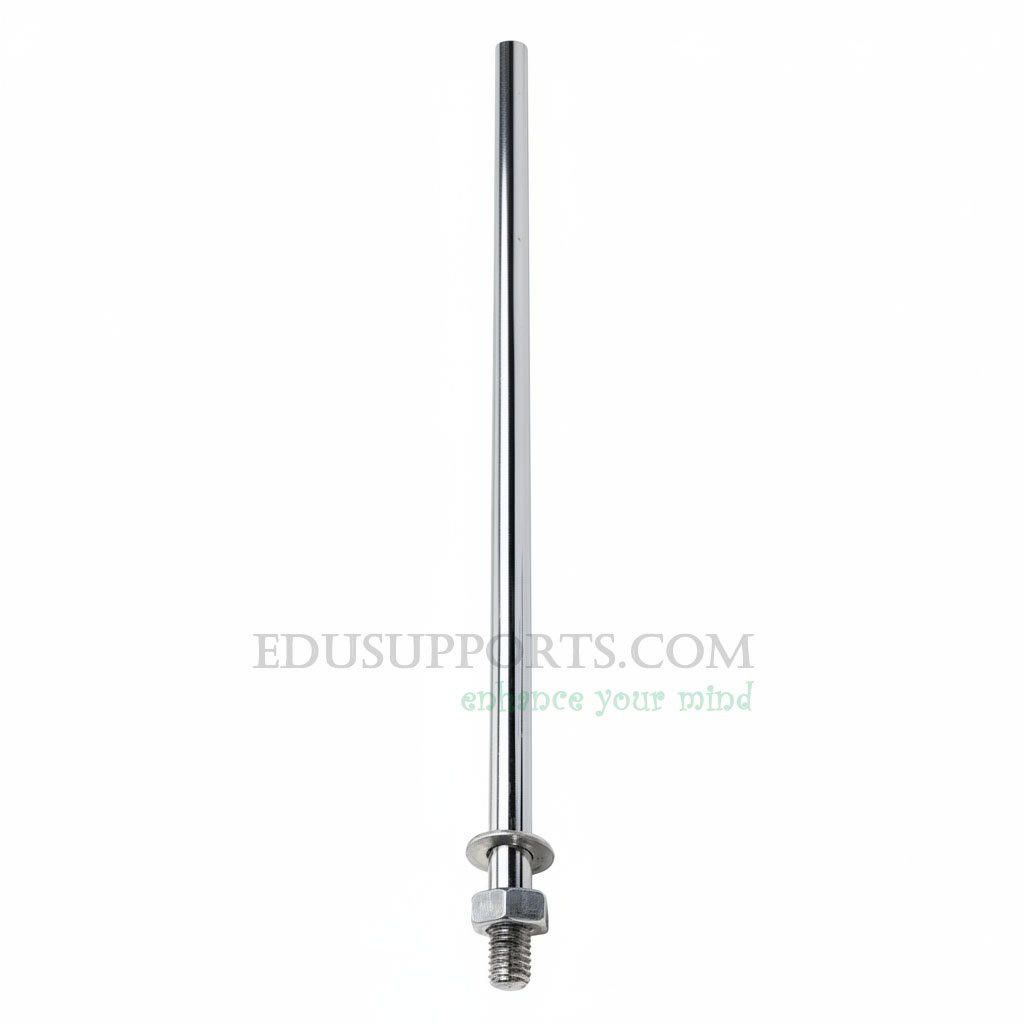
A metal rod fixed to the base allows accessories to be attached at different heights. The rod is typically adjustable and corrosion-resistant.
3. Clamps and Bossheads
Clamps are used to hold laboratory glassware such as:
Burettes
Flasks
Test tubes
They can be positioned anywhere along the rod for maximum flexibility.
4. Rings and Attachments
Support rings are commonly used for:
Filtration setups
Heating experiments
Funnel support
Common Uses of Lab Stand Sets
Lab stand sets are used in almost every laboratory setting due to their versatility:
Application
Typical Use
Titration
Securing burettes vertically for precise liquid measurement
Filtration
Holding filter funnels over beakers or flasks
Heating
Placing an alcohol burner under an iron ring to heat beakers
Distillation
Clamping condensers, receivers, and heating mantles
Chromatography
Supporting tall columns in a vibration-free setup
Electrolysis
Holding electrodes and beakers in position
General glassware support
Clamping test tubes, round-bottom flasks, and other reaction vessels
Types of Lab Stand Sets
1. Standard Lab Stand Set
Base + rod + clamp
Suitable for general laboratory use
2. Heavy-Duty Stand Set
Larger base
Higher load capacity
Used for industrial or large-scale experiments
3. Stainless Steel Lab Stand
Corrosion-resistant
Ideal for chemical and humid environments
4. Modular Lab Stand System
Multiple rods and clamps
Flexible for complex experimental setups
Why Lab Stand Sets Are Essential
Lab stand sets are not just basic tools—they are critical for laboratory safety and precision.
They help:
Secure fragile glassware
Maintain accurate positioning
Improve experimental consistency
Reduce risk of accidents
Because of their versatility, they are widely used in:
Chemistry labs
Biology labs
Pharmaceutical research
Educational institutions
How to Choose the Right Lab Stand Set
When selecting a lab stand set, consider the following factors:
Stability
A heavier base ensures better balance and safety.
Material
Stainless steel → corrosion resistance
Coated steel → cost-effective
Aluminum → lightweight
Rod Height and Diameter
Choose based on experiment size and required flexibility.
Compatibility
Ensure clamps and accessories match your lab equipment.
Customization
For professional labs, customization is important:
Rod length
Base size
Clamp types
Lab Stand Set vs Lab Jack: What’s the Difference?
Feature
Lab Stand Set
Lab Jack
Function
Hold equipment
Lift equipment
Structure
Rod + clamps
Scissor platform
Use
Support & positioning
Height adjustment
👉 In many experiments, both are used together for maximum flexibility.
How to Set Up a Lab Stand Safely
Proper setup is critical for experiment safety. Follow these guidelines:
Place on a stable, level surface: Ensure the workbench is clean and level. Use a spirit level if necessary.
Assemble components correctly: Insert the rod into the base and tighten securely. Attach the cross clamp, then the desired clamp or ring.
Check center of gravity: Always position heavy apparatus directly above the base. For tall setups, use a larger base and keep heavier items low.
Secure glassware gently: When clamping glassware, loosen the screw, insert the glass, and tighten just enough to prevent rotation — do not overtighten. Pad the clamp jaws with rubber tubing or cloth to protect glass surfaces.
Ensure the notch faces upward: Most clamps and rings attach using a double-notch screw. The accessory bar notch must face upward to prevent the accessory from falling if the screw loosens.
Inspect before each use: Check for rust, loose screws, or damaged components. Replace worn parts immediately.
Maintenance Tips for Long-Lasting Lab Stands
To extend the life of your lab stand:
Wipe dry after each use — moisture leads to rust on carbon steel components.
Avoid acid/base spills — if spills occur, clean immediately with a damp cloth.
Store in a dry area — humidity accelerates corrosion.
Inspect screws and clamps regularly — tighten any loose connections.
For stainless steel stands, use non-abrasive cleaners to maintain the brushed finish.
Looking for a Reliable Lab Stand Set Supplier?
Edusupports offers a comprehensive range of lab stand sets tailored to different applications and budgets. Our series include:
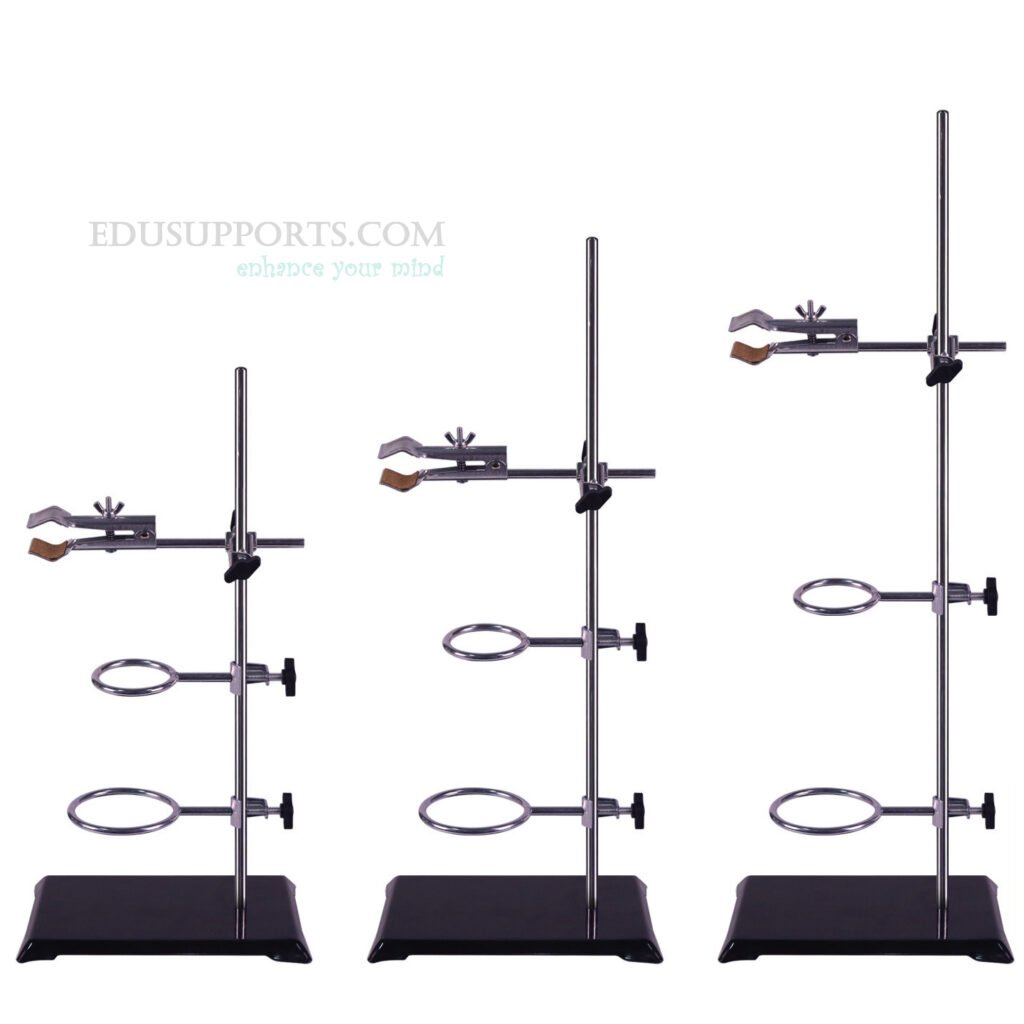
Carbon Steel Retort Stand Series— Available in 30cm (mini), 40cm, 50cm, and 60cm heights. Solid steel rods (6.2mm or 9mm diameter), stable bases, complete accessory kits including cross clamp, flask clamp, small and large iron rings. Ideal for school and home labs.
Heavy-Duty Retort Stand Series — 12mm solid rods (carbon steel/cast iron). Heights from 60cm to 120cm. Standard base (135×210mm) or large base (190×310mm) options. Includes cross clamp, flask clamp, small and large iron rings. Perfect for industrial labs, tall chromatography columns, and heavy apparatus.
Stainless Steel Retort Stand Series — 60cm height, 12mm solid rod. Available in standard model (stainless steel shell with iron counterweight) and university grade (full 304 stainless steel base with non-slip sleeve). Extra-wide cross clamp (max 75mm) on university model. Corrosion-resistant, autoclavable — ideal for cleanrooms, fume hoods, and pharmaceutical labs.
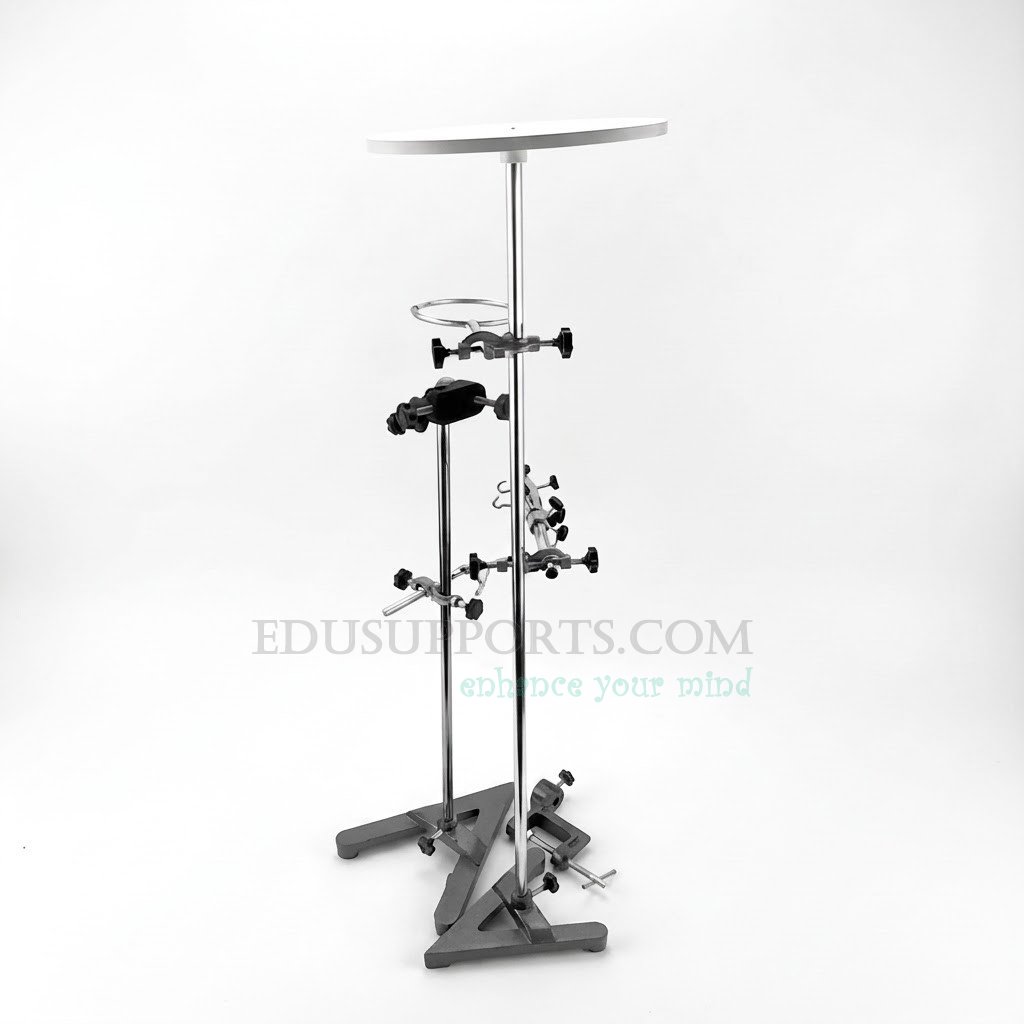
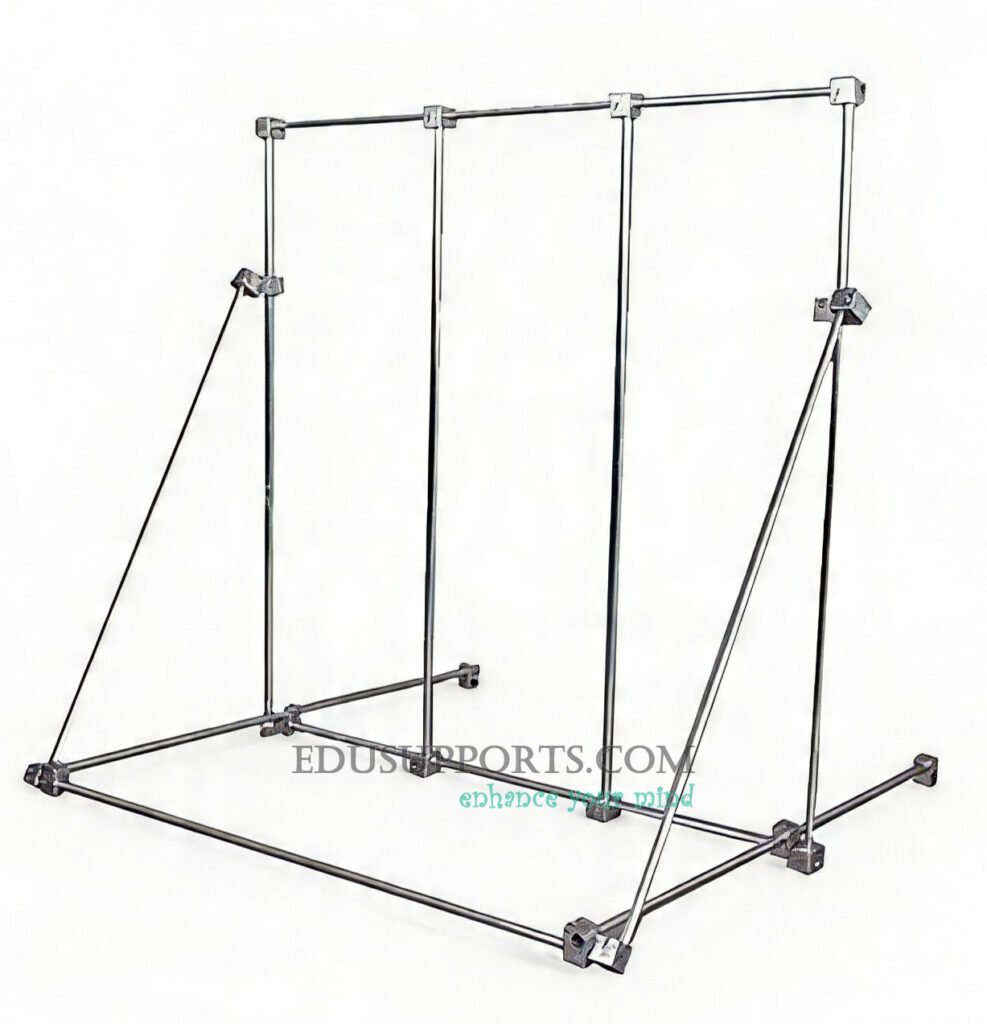
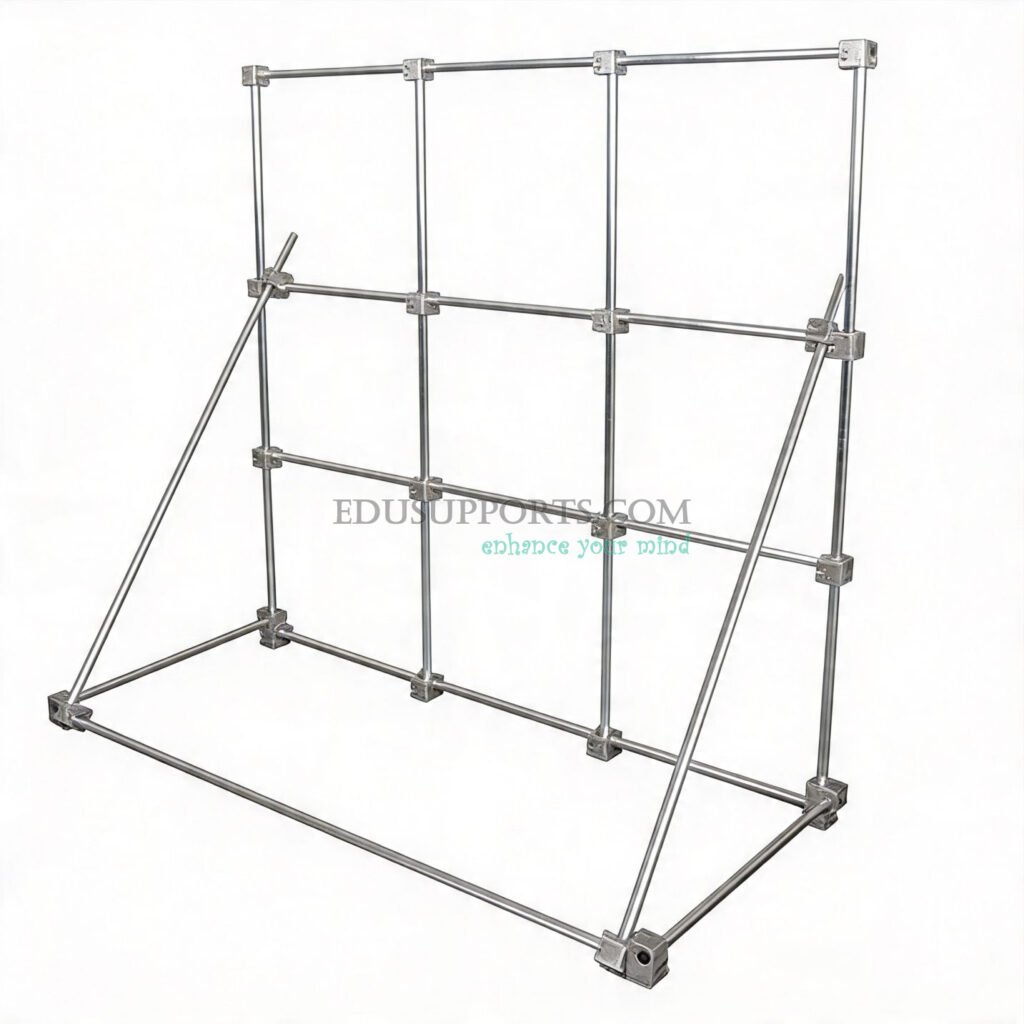
Lab Frame Series— Lightweight, rust-proof, modular support structures. Available in 70×70cm, 70×100cm, and 100×100cm sizes. Choose from aluminum, iron, or stainless steel rods. Perfect for chromatography, distillation, and cleanroom applications.
Each stand set is carefully assembled with all necessary accessories and backed by Edusupports‘ quality guarantee. Custom configurations are available upon request.
Frequently Asked Questions
Q: Can one retort stand support multiple pieces of glassware? Yes, with multiple boss heads and clamps attached to the same rod. However, ensure the base is heavy enough and the center of gravity remains within the base area to prevent tipping.
Q: What type of clamp is best for titration? Double-arm burette clamps provide the most secure and precise positioning for titration work.
Q: Are aluminum stands strong enough for regular lab use? Yes. Aluminum offers excellent strength-to-weight ratio. It is lighter than steel but still provides ample rigidity for most teaching and general lab applications.
Q: How do I prevent glassware from breaking when using a clamp? Always pad the clamp jaws with rubber tubing, cloth, or tape. Tighten the clamp just enough to prevent rotation — never overtighten.
Q: Can I buy additional clamps and rings separately? Yes. Edusupports offers a wide range of individual accessories including cross clamps, flask clamps, burette clamps, iron rings of various sizes, and titration clamps. Contact us for custom orders.


 English