Titration Stand Set: Types, Materials, and How to Choose the Right Laboratory Stand

What Is a Titration Stand Set?

A titration stand set is a fundamental laboratory support system used to secure burettes and other glassware during titration experiments. It typically consists of a heavy base, a vertical rod (commonly around 60 cm), and clamps such as butterfly or burette clamps.

These stands are widely used in chemistry laboratories because they provide stability, precision, and safety, which are critical for accurate measurements.

Key Components of a Titration Stand

A standard titration stand set includes:

  • Base – Provides stability and prevents tipping
  • Support Rod (60 cm typical) – Allows vertical adjustment
  • Clamp (Butterfly or Burette Clamp) – Holds glassware securely

Most laboratory stands use stainless steel rods and heavy bases to ensure durability and corrosion resistance.

Typical Types of Titration Stand Sets

Solid Stainless Steel Titration Stand – 60cm, 40mm Max Opening with double‑sided aluminum butterfly clip, 40mm max opening, 60cm total height, 9.5mm rod, solid stainless steel base 280x155x22mm, weight 1700g
  • Fully stainless steel construction
  • Strong corrosion resistance
  • Long lifespan

Best for:

  • Chemical labs
  • Industrial environments

Features:

  • Stainless steel outer layer with iron core
  • Strong structure with reduced cost

Best for:

  • Educational laboratories
  • Budget-conscious buyers
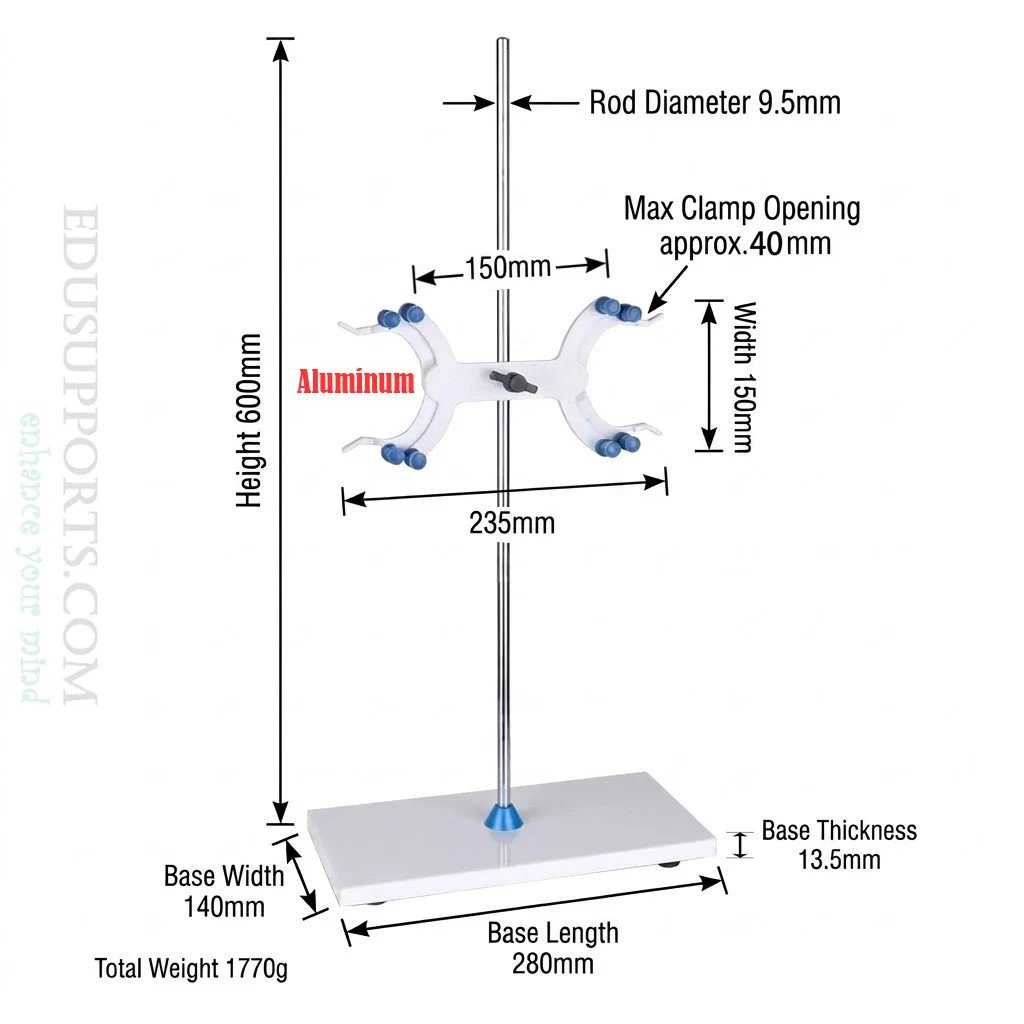
Marble titration stand 60cm with aluminum butterfly clamp, steel rod 9.5mm, marble base 280x140x13.5mm, weight 1770g, max clip opening 40mm
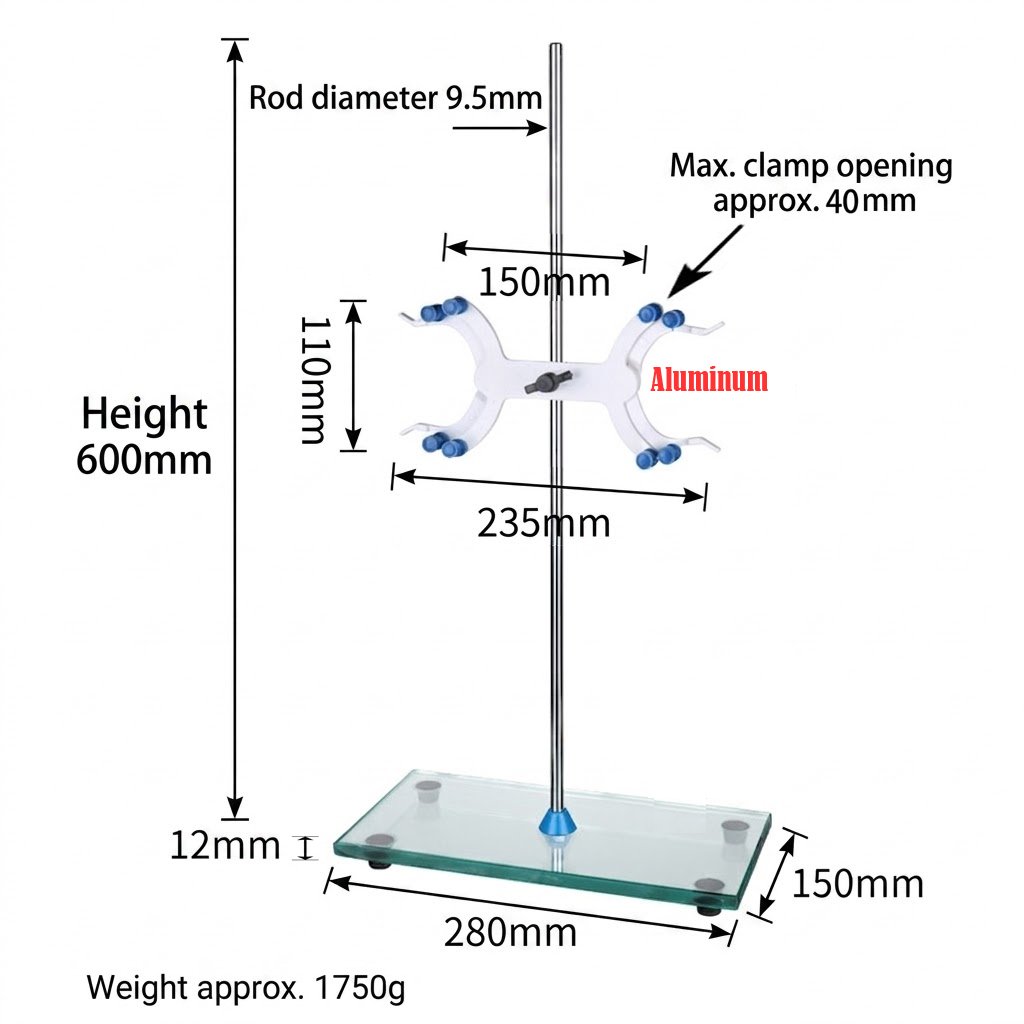
Glass Base Titration Stand – Aluminum Butterfly Clamp for Labs

Features:

  • Tempered glass base
  • Smooth surface, easy to clean
  • Modern appearance

Best for:

  • Teaching labs
  • Clean and controlled environments

Features:

  • Heavy marble base
  • Superior stability and vibration resistance

Best for:

  • Precision experiments
  • High-stability requirements
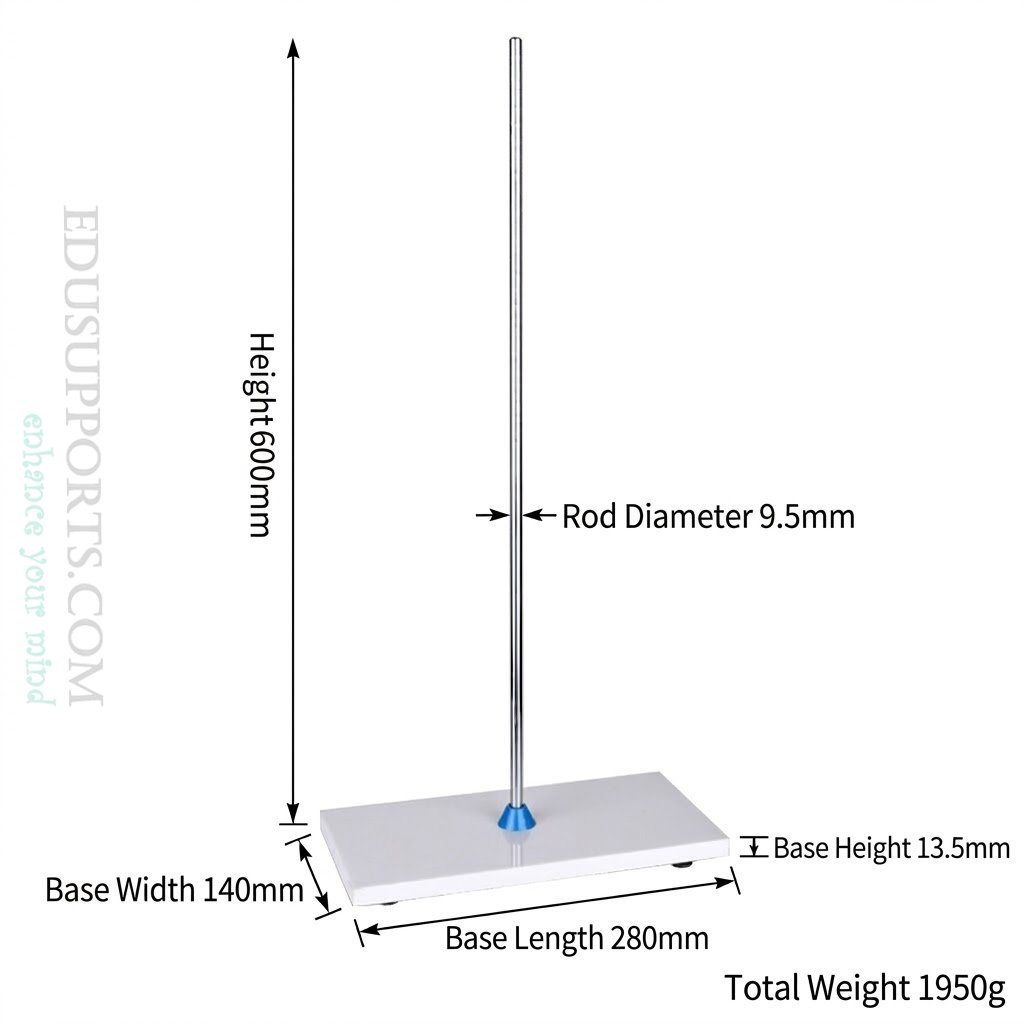
Marble titration stand 60cm base and rod only (no butterfly clip), marble base 280x140x13.5mm, steel rod 9.5mm, weight 1650g

Comparison of Different Types

TypeStabilityDurabilityCostApplication
Stainless SteelHighVery HighMediumIndustrial labs
HybridMedium-HighHighLowEducation
Glass BaseMediumMediumMediumTeaching
Marble BaseVery HighHighMedium-HighPrecision work

Why Material Matters

The material of a titration stand directly affects:

  • Stability during experiments
  • Resistance to chemicals
  • Long-term durability

 For example:

  • Stainless steel resists corrosion
  • Marble provides maximum stability
  • Glass offers easy cleaning and aesthetics

How to Choose the Right Titration Stand

1. Rod Height and Diameter

  • Standard height: 60 cm
  • Diameter: ~9–10 mm

2. Base Weight

Heavier bases improve safety and reduce vibration.

4. Application Needs

  • Education → hybrid or glass
  • Industrial → stainless steel
  • Precision → marble base

Applications of Titration Stand Sets

Titration stands are widely used in:

  • Acid-base titration
  • Chemical analysis
  • Pharmaceutical testing
  • Laboratory education

They ensure accurate positioning, safety, and repeatability in experiments.

Why a High-Quality Titration Stand Matters

A reliable titration stand set can:

  • Improve measurement accuracy
  • Prevent glassware damage
  • Increase lab safety
  • Enhance workflow efficiency

Reliable Titration Stand Supplier

At edusupports.com, we offer:

  • Solid stainless steel stands
  • Hybrid steel stands
  • Glass base titration stands
  • Marble base titration stands

All models feature:

  • 60 cm rods
  • Durable construction
  • Compatibility with standard clamps
  • Customization options

Get a Quote

Looking for a customized titration stand set?

 Contact us for:

  • Bulk pricing
  • OEM manufacturing
  • Custom specifications
Shopping Cart
en_USEnglish
Scroll to Top